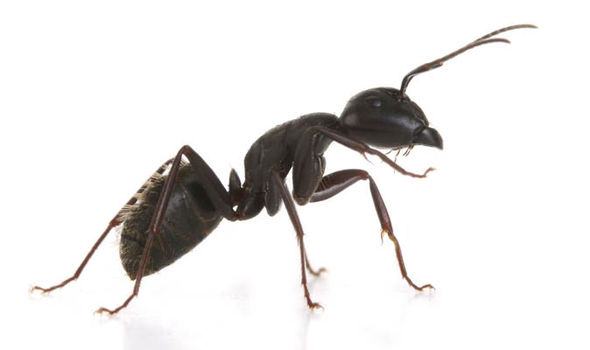
What do you call a 100-year-old ant?
[3712] What do you call a 100-year-old ant? - What do you call a 100-year-old ant? - #brainteasers #riddles - Correct Answers: 45 - The first user who solved this task is On On Lunarbasil
BRAIN TEASERS
enter your answer and press button OK

What do you call a 100-year-old ant?

What do you call a 100-year-old ant?
Correct answers: 45
The first user who solved this task is On On Lunarbasil.
#brainteasers #riddles
Register with your Google Account and start collecting points.
Check your ranking on list.

A Very Minor Sin

A famous professor of surgery died and went to heaven. At the pearly gates he was asked by the gatekeeper, "Have you ever committed a sin you truly regret?""Yes," the professor answered. "When I was a young candidate at the Hospital of Saint Lucas, we played soccer against a team from the Community Hospital, and I scored a goal, which was off-side. But the referee did not see it, and the goal won us the match. I regret that now."
"Well," said the gatekeeper. "That is a very minor sin. You may enter."
"Thank you very much, Saint Peter," the professor answered.
"You're welcome, but I am not Saint Peter," said the gatekeeper. "He is having his lunch break. I am Saint Lucas."
Jokes of the day - Daily updated jokes. New jokes every day.
Follow Brain Teasers on social networks

Brain Teasers

puzzles, riddles, mathematical problems, mastermind, cinemania...

George Richards Minot

Born 2 Dec 1885; died 25 Feb 1950 at age 64.American physician who received (with George Whipple and William Murphy) the Nobel Prize for Physiology or Medicine in 1934 for the introduction of a raw-liver diet to regenerate blood hemoglobin in the treatment of pernicious anemia, which was previously an invariably fatal disease. Later, he helped develop liver extract for oral use (now replaced by vitamin B12 injections). Earlier, during WW I, at the suggestion of Alice Hamilton, pioneer in industrial medicine at Harvard, Minot had investigated the anemia occurring among New Jersey ammunition workers. From studies of their blood, he found that the trinitrotoluene (TNT) used to fill shells acted as a poison, causing destruction of red cells, often producing anemia.
This site uses cookies to store information on your computer. Some are essential to help the site properly. Others give us insight into how the site is used and help us to optimize the user experience. See our privacy policy.