What does the following rebu...
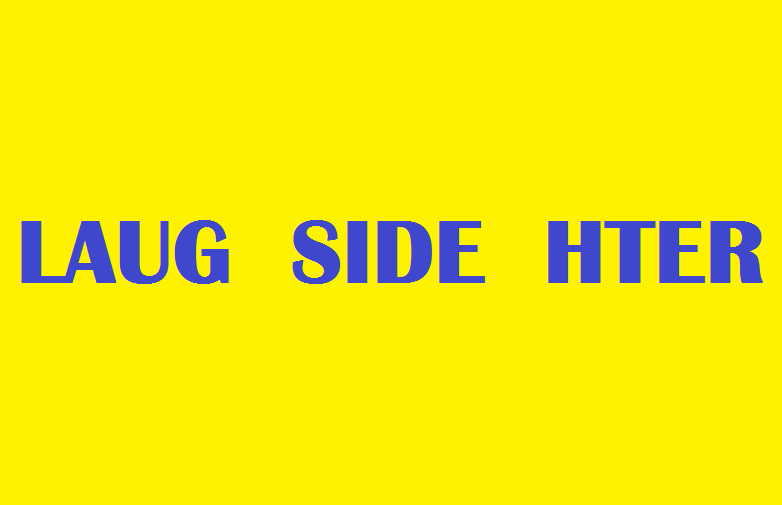
[4643] What does the following rebu... - What does the following rebus represent? - #brainteasers #wordpuzzles #riddles - Correct Answers: 19 - The first user who solved this task is Djordje Timotijevic
BRAIN TEASERS
enter your answer and press button OK

What does the following rebu...

What does the following rebus represent?
Correct answers: 19
The first user who solved this task is Djordje Timotijevic.
#brainteasers #wordpuzzles #riddles
Register with your Google Account and start collecting points.
Check your ranking on list.

While the bar patron savored a...

While the bar patron savored a double martini, an attractive women sat down next to him. The bartender served her a glass of orange juice, and the man turned to her and said, "This is a special day. I'm celebrating."

"I'm celebrating, too," she replied, clinking glasses with him.

"What are you celebrating?" he asked.

"For years I've been trying to have a child," she answered, "Today my gynecologist told me I'm pregnant!"

"Congratulations," the man said, lifting his glass. "As it happens, I'm a chicken farmer, and for years all my hens were infertile. But today they're finally fertile."

"How did it happen?"

"I switched cocks."

"What a coincidence," she said, smiling.

Jokes of the day - Daily updated jokes. New jokes every day.
Follow Brain Teasers on social networks

Brain Teasers

puzzles, riddles, mathematical problems, mastermind, cinemania...

James Bryan Herrick

Born 11 Aug 1861; died 7 Mar 1954 at age 92.American physician and clinical cardiologist who was the first to observe and describe sickle-cell anemia. In 1910, he reported an unusual case he had examined. The patient was a 20-year-old West Indies student, attending a dental school in Chicago. "His illness had begun with malaise, pain in the back, the muscles of the legs and arms. He had a slight fever and was pale... he had suffered from a bilious attack... had vomited and... somewhat short of breath." In a blood test, Herrick found "nucleated reds were numerous [normal red blood cells lack a nucleus], 74 being seen in a count of 200 leukocytes [white blood cells]. The shape of the reds was very irregular... [with a] large number of thin, elongated, sickle-shaped and crescent-shaped forms."
This site uses cookies to store information on your computer. Some are essential to help the site properly. Others give us insight into how the site is used and help us to optimize the user experience. See our privacy policy.