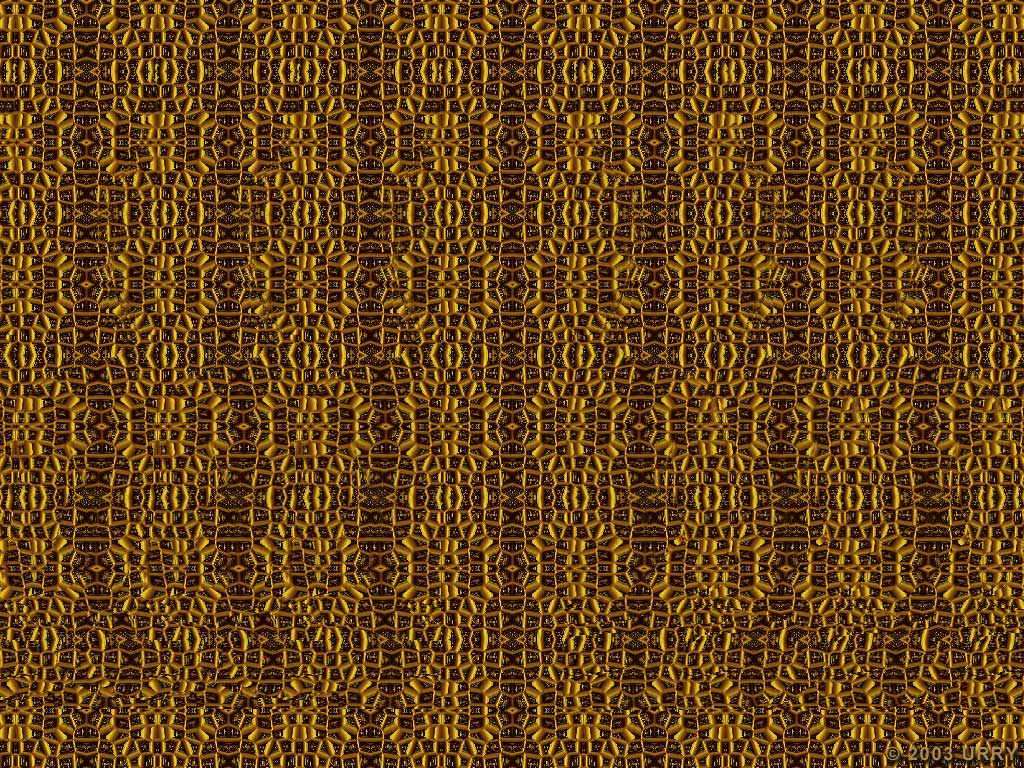
What hides this stereogram?
[1733] What hides this stereogram? - Stereogram - 3D Image - #brainteasers #stereogram #3Dimage
BRAIN TEASERS

What hides this stereogram?

Stereogram - 3D Image
#brainteasers #stereogram #3Dimage
Register with your Google Account and start collecting points.
Check your ranking on list.

Whitey was in the fertilized e...

Whitey was in the fertilized egg business. He had several hundred young layers called pullets and eight or ten roosters, whose job was to fertilize the eggs. Whitey kept records and any rooster that didn't perform went into the soup pot and was replaced.
That took an awful lot of Whitey's time so Whitey got a set of tiny bells and attached them to his roosters.
Each bell had a different tone so Whitey could tell from a distance, which rooster was performing.
Now he could sit on the porch and fill out an efficiency report simply by listening to the bells.
Whitey's favorite rooster was old Brewster, a very fine specimen he was, too. But on this particular morning Whitey noticed old Brewster's bell hadn't rung at all!
Whitey went to investigate. The other roosters were chasing pullets, bells-a-ringing. The pullets, hearing the roosters coming, would run for cover.
BUT, to Whitey's amazement, Brewster had his bell in his beak, so it couldn't ring. He'd sneak up on a pullet, do his job and walk on to the next one.
Whitey was so proud of Brewster, he entered him in the county fair... and Brewster became an overnight sensation among the judges. The result...
The judges not only awarded Brewster the "No Bell Piece Prize" but they also awarded him the "Pulletsurprise" as well.
Jokes of the day - Daily updated jokes. New jokes every day.
Follow Brain Teasers on social networks

Brain Teasers

puzzles, riddles, mathematical problems, mastermind, cinemania...

Leonard Eugene Dickson

Born 22 Jan 1874; died 17 Jan 1954 at age 79.American mathematician who made important contributions to the theory of numbers and the theory of groups. He published 18 books including Linear groups with an exposition of the Galois field theory. The 3-volume History of the Theory of Numbers (1919-23) is another famous work still much consulted today.
This site uses cookies to store information on your computer. Some are essential to help the site properly. Others give us insight into how the site is used and help us to optimize the user experience. See our privacy policy.