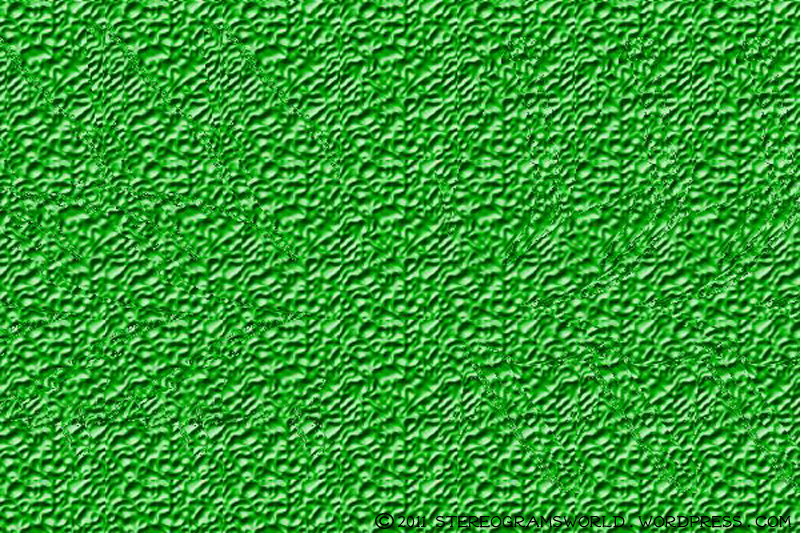
What is hidden in 3D image?
[1677] What is hidden in 3D image? - Stereogram - 3D Image - #brainteasers #stereogram #3Dimage
BRAIN TEASERS

What is hidden in 3D image?

Stereogram - 3D Image
#brainteasers #stereogram #3Dimage
Register with your Google Account and start collecting points.
Check your ranking on list.

A note from mom...

John, a well-to-do bachelor, invited his mother over for dinner one night. During the meal, Mom couldn't help notice how attractive and shapely the house keeper was, and wondered if there was more going on than meets the eye. John sensing what his mother was thinking said to her "I know what you're thinking, Mom, but I assure you my relationship with the house keeper is purely professional."

A week later, the house keeper told John that ever since his mother's visit a silver gravy ladle has been missing. John sent his mother a note which said, "Mom, I'm not saying you did take the gravy ladle, and I'm not saying you didn't, but the fact remains one has been missing since you were here".

A few days later he receives a note from his mother. "John: I'm not saying you sleep with your house keeper, nor am I saying you're not. But the fact remains that if she were sleeping in her own bed she would have found the gravy ladle by now. Love, Mom".

Jokes of the day - Daily updated jokes. New jokes every day.
Follow Brain Teasers on social networks

Brain Teasers

puzzles, riddles, mathematical problems, mastermind, cinemania...

Cavendish Laboratory

In 1874, the Cavendish Laboratory was opened at the University of Cambridge, England. It was built as a teaching laboratory with a regular course of instruction - a new idea for the time. Until then, much of experimental physics was conducted as individual work in essentially private laboratories. Joule and Cavendish, for example, set up their facilities in their own home, at their own expense. An early exception was the laboratory at the University of Glasgow established in the 1840's by William Thompson (later Lord Kelvin). The first Cavendish Professor (1871-1879) was James Clerk-Maxwell, followed by Lord Rayleigh (1879-1884), who both much expanded knowledge of physics. The third Cavendish Professor was J.J. Thomson, discoverer of the electron.«*
This site uses cookies to store information on your computer. Some are essential to help the site properly. Others give us insight into how the site is used and help us to optimize the user experience. See our privacy policy.