
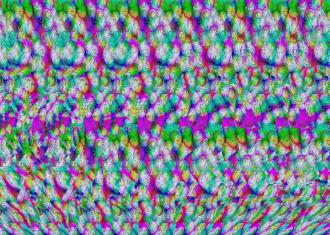
What is hidden in 3D image?
[2115] What is hidden in 3D image? - Stereogram - 3D Image - #brainteasers #stereogram #3Dimage
BRAIN TEASERS

What is hidden in 3D image?

Stereogram - 3D Image
#brainteasers #stereogram #3Dimage
Register with your Google Account and start collecting points.
Check your ranking on list.

Miracle worker...

Two guys and a union worker were fishing on a lake one day, when Jesus walked across the water and joined them in the boat. When the three astonished men had settled down enough to speak, the first guy asked, humbly, "Jesus, I've suffered from back pain ever since I took shrapnel in the Vietnam War...could you help me?"

"Of course, my son," Jesus said, and when he touched the man's back, he felt relief for the first time in years.

The second man, who wore very thick glasses and had a hard time reading and driving, asked if Jesus could do anything about his eyesight.

Jesus smiled, removed the man's glasses and tossed them in the lake. When they hit the water, the man's eyes cleared, and he could see everything distinctly.

When Jesus turned to heal the union worker, the guy put his hands up and cried, defensively, "DON'T TOUCH ME! I'm on long-term disability!"

Jokes of the day - Daily updated jokes. New jokes every day.
Follow Brain Teasers on social networks

Brain Teasers

puzzles, riddles, mathematical problems, mastermind, cinemania...

Guncotton patent

In 1846, Christian Frederick Schönbein of Basle, Switzerland, was issued a U.S. Patent for guncotton titled “Improvement in Preparation of Cotton-Wool and Other Substances as Substitutes for Gunpowder”(No. 4874). The process uses a mixture of concentrated acids to convert the cellulose present in well-cleaned cotton-wool, C6H10O5 into cellulose nitrate C6H8(NO2)2O5 (nitrocellulose). In 1891, James Dewar and Frederick Abel incorporated nitrocellulose in a mixture that could be handled more safely. Until WW II, this invention replaced gunpower on the battlefield, where it had been used for five centuries. It was also useful for blasting because it generates about six times the gas of an equal volume of gunpowder and produces less smoke and heat.
This site uses cookies to store information on your computer. Some are essential to help the site properly. Others give us insight into how the site is used and help us to optimize the user experience. See our privacy policy.