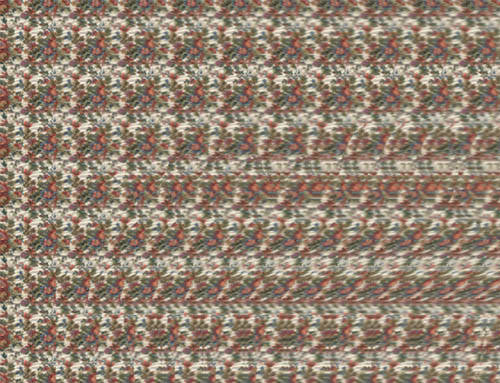
What is hidden in 3D image?
[2206] What is hidden in 3D image? - Stereogram - 3D Image - #brainteasers #stereogram #3Dimage
BRAIN TEASERS

What is hidden in 3D image?

Stereogram - 3D Image
#brainteasers #stereogram #3Dimage
Register with your Google Account and start collecting points.
Check your ranking on list.

22 Fresh Halloween jokes for 2020

Q: Why do ghosts go on diets?
A: So they can keep their ghoulish figures

Q: What does a panda ghost eat?
A: Bam-BOO!

Q: Why don’t mummies take time off?
A: They’re afraid to unwind.

Q: Why did the zombie skip school?
A: He felt rotten.

Q: What is a vampire’s favorite fruit?
A: A blood orange.

Q: Where do baby ghosts go during the day?
A: Dayscare centers!

Q: Why did the headless horseman go into business?
A: He wanted to get ahead in life.

Q: What kind of music do mummies like listening to on Halloween?
A: Wrap music.

Q: Why don’t mummies have friends?
A: Because they’re too wrapped up in themselves.

Q: Why did the vampire read the newspaper?
A: He heard it had great circulation.

Q: What’s it like to be kissed by a vampire?
A: It’s a pain in the neck.

Q: What’s it called when a vampire has trouble with his house?
A: A grave problem.

Q: What do you call a cleaning skeleton?
A: The grim sweeper. Q:

Q: Why did the vampire need mouthwash?
A: Because he had bat breath.

Q: What do you call a witch’s garage?
A: A broom closet.

Q: What kind of food would you find on a haunted beach?
A: A sand-witch!

Q: What's a witch's favorite makeup?
A: Ma-scare-a.

Q: Who helps the little pumpkins cross the road safely?
A: The crossing gourd.

Q: What treat do eye doctors give out on Halloween?
A: Candy corneas.

Q: What type of plants do well on all Hallow’s Eve?
A: Bam-BOO!

Q: Why don’t skeletons ever go trick or treating?
A: Because they have no-body to go with.

Jokes of the day - Daily updated jokes. New jokes every day.
Follow Brain Teasers on social networks

Brain Teasers

puzzles, riddles, mathematical problems, mastermind, cinemania...

Robert Schrieffer

Born 31 May 1931.John Robert Schrieffer is an American physicist whoshared(with John Bardeen and Leon N. Cooper) the 1972 Nobel Prize for Physics for developing the BCS theory (for their initials), the first successful microscopic theory of superconductivity. Although first described by Kamerlingh Onnes (1911), no theoretical explanation had been accepted. It explains how certain metals and alloys lose all resistance to electrical current at extremely low temperatures. The insight of the BCS theory is that at very low temperatures, under certain conditions, electrons can form bound pairs (Cooper pairs). This pair of electrons acts as a single particle in superconductivity. Schrieffer continued to focus his research on particle physics, metal impurities, spin fluctuations, and chemisorption.
This site uses cookies to store information on your computer. Some are essential to help the site properly. Others give us insight into how the site is used and help us to optimize the user experience. See our privacy policy.