
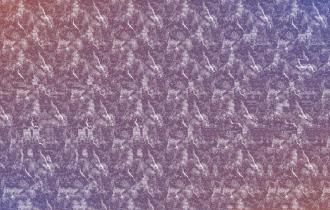
What is hidden in 3D image?
[2249] What is hidden in 3D image? - Stereogram - 3D Image - #brainteasers #stereogram #3Dimage
BRAIN TEASERS

What is hidden in 3D image?

Stereogram - 3D Image
#brainteasers #stereogram #3Dimage
Register with your Google Account and start collecting points.
Check your ranking on list.

Not tonight, Adam

After a few days, the Lord called to Adam and said, "It is time for you and Eve to begin the process of populating the earth, so I want you to kiss her." Adam answered, "Yes, Lord, but what is a 'kiss'?" The Lord gave a brief description to Adam, who then took Eve by the hand and led her to a nearby bush. A few minutes later, Adam emerged and said, "Thank you, Lord. That was enjoyable." And the Lord replied, "Yes, Adam, I thought you might enjoy that. Now I'd like you to caress Eve."And Adam said, "What is 'caress'?" So the Lord again gave Adam a brief description and Adam went behind the bush with Eve. Quite a few minutes later, Adam returned, smiling, and said, "Lord, that was even better than the kiss!" And the Lord said, "You've done well, Adam. Now I want you to make love to Eve."And Adam asked, "What is 'make love' Lord?" So the Lord again gave Adam directions and Adam went again to Eve behind the bush, but this time he reappeared in two seconds. And Adam said, "Lord, what is a 'headache'?"
Jokes of the day - Daily updated jokes. New jokes every day.
Follow Brain Teasers on social networks

Brain Teasers

puzzles, riddles, mathematical problems, mastermind, cinemania...

Five-needle telegraph demonstrated

In 1837, the five-needle telegraph was demonstrated by English inventors, Charles Wheatstone and William Fothergill Cooke. They ran a six-wire telegraph line 2.4-km from Euston to Camden Town along the Great Western Railway Company railway track. They successfully transmitted and received messages. Wheatstone provided the technological skill and is better remembered in the history of the telegraph while Cooke had the business acumen. This first patent (1837) was impractical because the code used simultaneous combinations of five keys, and so was rather cumbersome, limited to only twenty letters (J, C, Q, U, X and Z were omitted). By 1845, they patented the more important single-needle electric telegraph.«
This site uses cookies to store information on your computer. Some are essential to help the site properly. Others give us insight into how the site is used and help us to optimize the user experience. See our privacy policy.