
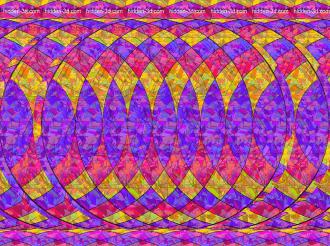
What is hidden in 3D image?
[2324] What is hidden in 3D image? - Stereogram - 3D Image - #brainteasers #stereogram #3Dimage
BRAIN TEASERS

What is hidden in 3D image?

Stereogram - 3D Image
#brainteasers #stereogram #3Dimage
Register with your Google Account and start collecting points.
Check your ranking on list.

The Sparrow

Once upon a time there was a non-conforming sparrow who decided not to fly south for the winter. However, soon the weather turned so cold that he reluctantly decided to fly south. In a short time ice began to form on his wings and he fell to Earth in a barnyard, nearly frozen solid. A cow passed by where he had fallen, and crapped on the little sparrow.The sparrow thought it was the end, but the manure warmed him and defrosted his wings!
Warm and happy, able to breath, he started to sing.
Just then a large cat came by, and hearing the chirping he investigated the sounds. The cat cleared away the manure, found the chirping bird, and promptly ate him.
The Moral of the Story:
Everyone who craps on you is not necessarily your enemy
Everyone who gets you out of crap is not necessarily your friend.
And if you're warm and happy in a pile of crap, you might just want to keep your mouth shut.
Jokes of the day - Daily updated jokes. New jokes every day.
Follow Brain Teasers on social networks

Brain Teasers

puzzles, riddles, mathematical problems, mastermind, cinemania...

Edison patent

In 1924, Thomas A. Edison was issued a patent for a “Method of Producing Chlorinated Rubber” (U.S. No. 1,495,580), which claimed to be more economical than earlier methods. Natural rubber readily degrades and becomes brittle in the presence of oxygen or ozone in the air. Chlorine is used to replace some hydrogen atoms in the surface molecules of the rubber making it more stable. Edison's method treated very thin rubber strips in a chamber with chlorine gas mixed with the vapour of a highly chlorinated solvent of rubber such as carbon tetrachloride to soften the rubber surface for increased penetration by the gaseous chlorine, followed by other processing. In his patent, Edison envisioned further processing it with naphthaline and fillers, for use as a tough, hard veneer for phonograph records or cylinders.«
This site uses cookies to store information on your computer. Some are essential to help the site properly. Others give us insight into how the site is used and help us to optimize the user experience. See our privacy policy.