
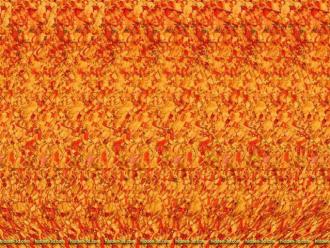
What is hidden in 3D image?
[2547] What is hidden in 3D image? - Stereogram - 3D Image - #brainteasers #stereogram #3Dimage
BRAIN TEASERS

What is hidden in 3D image?

Stereogram - 3D Image
#brainteasers #stereogram #3Dimage
Register with your Google Account and start collecting points.
Check your ranking on list.

Three Eggs and $100

An elderly pastor was searching his closet for his collar before church one Sunday morning. In the back of the closet, he found a small box containing three eggs and 100 $1 bills. He called his wife into the closet to ask her about the box and its contents. Embarrassed, she admitted having hidden the box there for their entire 30 years of marriage. Disappointed and hurt, the pastor asked her, "Why?" The wife replied that she hadn't wanted to hurt his feelings. He asked her how the box could have hurt his feelings. She said that every time during their marriage that he had delivered a poor sermon, she had placed an egg in the box. The pastor felt that three poor sermons in 30 years was certainly nothing to feel bad about, so he asked her what the $100 was for. She replied, "Each time I got a dozen eggs, I sold them to the neighbors for $1."
Jokes of the day - Daily updated jokes. New jokes every day.
Follow Brain Teasers on social networks

Brain Teasers

puzzles, riddles, mathematical problems, mastermind, cinemania...

Sir Alexander Fleming

Died 11 Mar 1955 at age 73 (born 6 Aug 1881). Scottish bacteriologist who discovered penicillin. In 1928, while working on influenza virus, he observed that mould had developed accidently on a staphylococcus culture plate and that the mould had created a bacteria-free circle around itself. He experimented further and he found that a mould culture prevented growth of staphylococci, even when diluted 800 times. The active substance, which he named penicillin, initiated the highly effective practice of antibiotic therapy for infectious diseases. Fleming shared the Nobel Prize for Physiology or Medicine in 1945 with Ernst Boris Chain and Howard Walter Florey, who both (from 1939) continued Fleming's work.
This site uses cookies to store information on your computer. Some are essential to help the site properly. Others give us insight into how the site is used and help us to optimize the user experience. See our privacy policy.