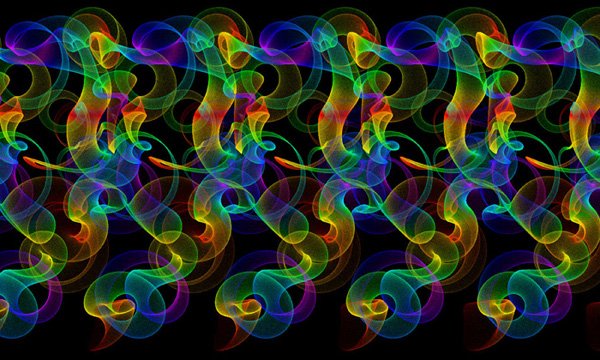
What is hidden in 3D image?
[2718] What is hidden in 3D image? - Stereogram - 3D Image - #brainteasers #stereogram #3Dimage
BRAIN TEASERS

What is hidden in 3D image?

Stereogram - 3D Image
#brainteasers #stereogram #3Dimage
Register with your Google Account and start collecting points.
Check your ranking on list.

An Englishman, a Scotsman and...

An Englishman, a Scotsman and an Irishman were trying to get in to see the Olympics without tickets. So they got to the stadium during one of the main events and discussed how they would be able to attend without paying.
The Englishman walked around the stadium and saw a pole lying on the ground and picked it up. He walked to the entrance and said, "Peter. England. Pole throwing." The guards let him in without hesitation.
While walking, the Scotsman sees a manhole. He picks up the cover, carries it under his arm to the entrance and says, "McGregor. Scotland. Discus throwing." The guards let him in also.
The Irishman is very frantic, since both his friends are now inside. He walks around the stadium and finds a roll of barbed wire. He picks it up, walks to the entrance and says, "Murphy. Ireland. Fencing."
Jokes of the day - Daily updated jokes. New jokes every day.
Follow Brain Teasers on social networks

Brain Teasers

puzzles, riddles, mathematical problems, mastermind, cinemania...

Friedrich Mohs

Died 29 Sep 1839 at age 66 (born 29 Jan 1773).German mineralogist who devised the Mohs scale to compare mineral harness, illustrated by ten common or readily-available minerals. They are ranked by which can scratch another. At the beginning of his scale, 1 to 3, are talc, gypsum and calcite. At the top, the hardest 8 to 10, are topaz (including emerald and aquamarine), corundum (including as varieties sapphire and ruby) and diamond. Diamond is known for its common use to edge cutting tools, because it is four times as hard than even corundum. Interestingly, gold and silver come in the 2.5 to 3 range, which is comparable to the hardness of a fingernail (2.5). Mohs proposed this non-linear hardness scale in 1812, after spending a year as curator organizing an institution's mineral collection. By 1820, his scale was widely used by mineralogists, and he contined to refine it.«
This site uses cookies to store information on your computer. Some are essential to help the site properly. Others give us insight into how the site is used and help us to optimize the user experience. See our privacy policy.