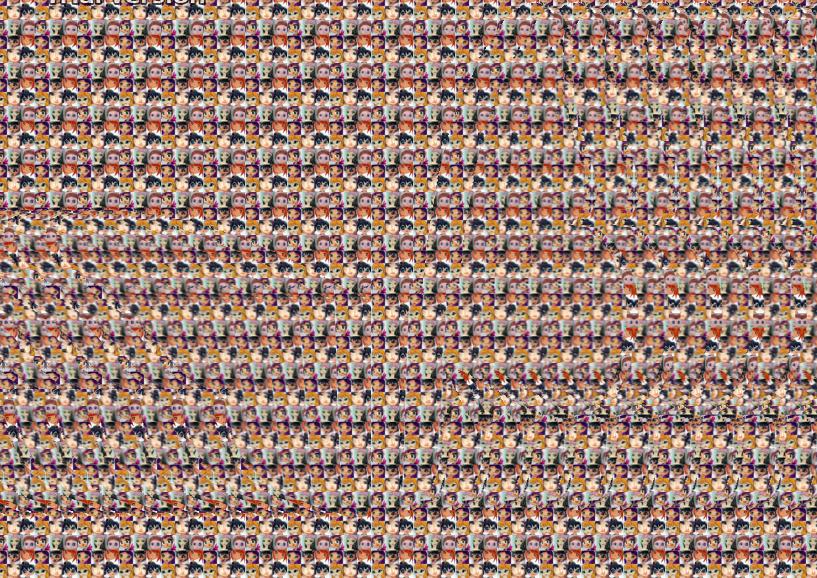
What is hidden in 3D image?
[3033] What is hidden in 3D image? - Stereogram - 3D Image - #brainteasers #stereogram #3Dimage
BRAIN TEASERS

What is hidden in 3D image?

Stereogram - 3D Image
#brainteasers #stereogram #3Dimage
Register with your Google Account and start collecting points.
Check your ranking on list.

Don't give up. You time is coming soon.

I know sometimes you feel like giving up. Every new day there seems to be no change in your life. All the troubles of your heart and worries keep on worsening! You wonder why everything is happening to you. You keep on asking yourself why you’re not lucky like other people. You keep on praying to God but so far He hasn’t answered your prayers. Now you have started losing hope. You now think that maybe you were meant to be like that or maybe somebody cursed you. But I tell you what my friend? You weren’t meant to be like that and you weren’t cursed. God is silent but He watches you day and night. He listens to your prayers and He has something special for you. Just stay strong, focused, and hardworking and keep praying to God. Bear it in your minds that you’re not alone in that hard situation, we are all in the same boat. So don’t give up my dear friend. Your time is coming soon.
Jokes of the day - Daily updated jokes. New jokes every day.
Follow Brain Teasers on social networks

Brain Teasers

puzzles, riddles, mathematical problems, mastermind, cinemania...

Robert S. Dietz

Died 19 May 1995 at age 80 (born 14 Sep 1914).Robert Sinclair Dietz was an American geophysicist and oceanographer who set forth a theory (1961) of seafloor spreading (a term he coined), in which new crustal material continually upwells from the Earth's depths along the mid-ocean ridges and spreads outward at a rate of several inches per year. While a student Dietz identified the Kentland structure in Indiana as a meteoric impact site. His professors steered him toward marine geology. He became the founder and director of the Sea Floor Studies Section at the Naval Electronics Laboratory (1946-1963). He also achieved prominence by studying meteorite craters, both on Earth and on the moon and arguing that these impact craters were common. He died of a heart attack.
This site uses cookies to store information on your computer. Some are essential to help the site properly. Others give us insight into how the site is used and help us to optimize the user experience. See our privacy policy.