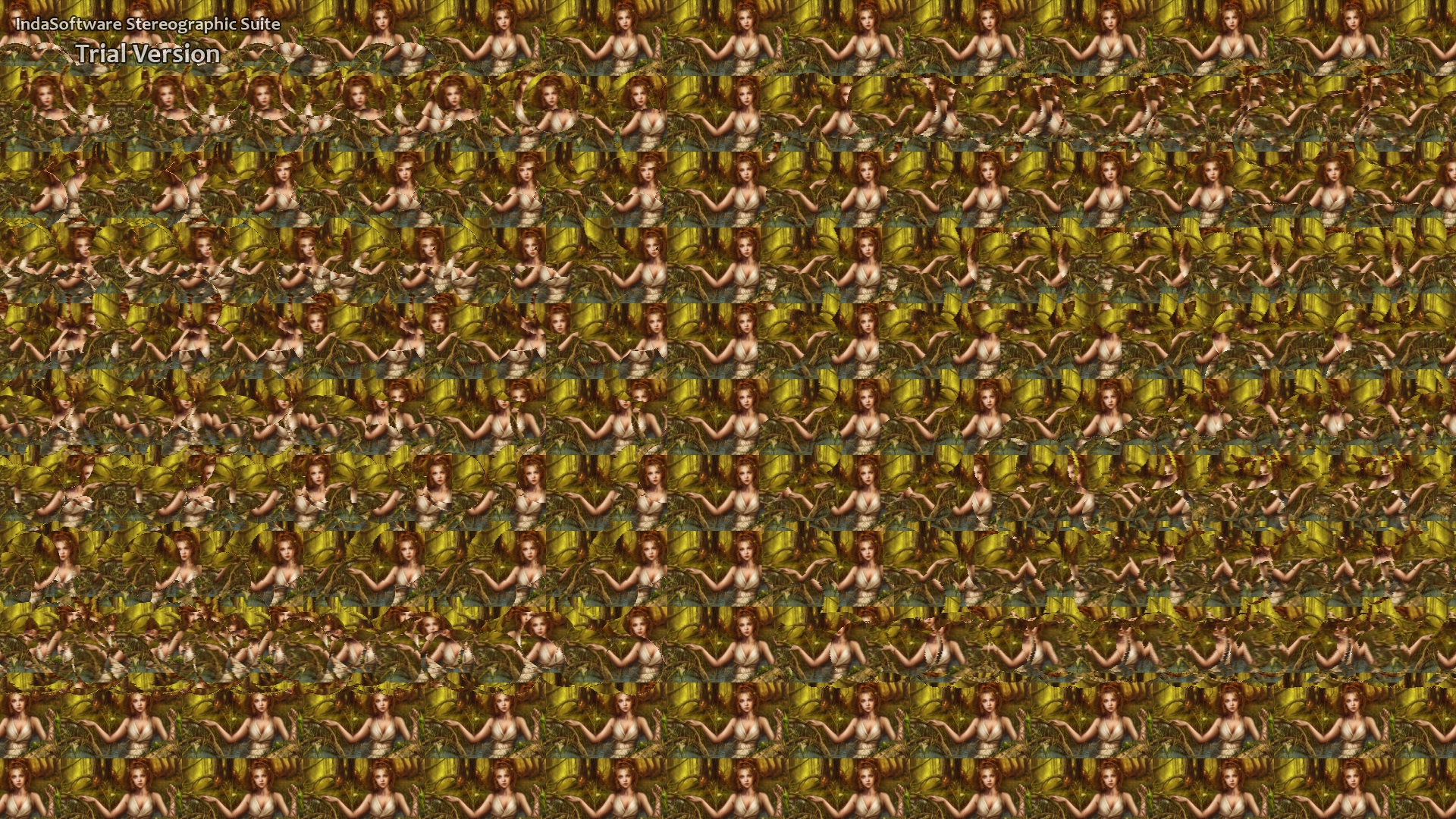
What is hidden in 3D image?
[3538] What is hidden in 3D image? - Stereogram - 3D Image - #brainteasers #stereogram #3Dimage
BRAIN TEASERS

What is hidden in 3D image?

Stereogram - 3D Image
#brainteasers #stereogram #3Dimage
Register with your Google Account and start collecting points.
Check your ranking on list.

An HMO Manager at the Pearly Gates

Two doctors and an HMO manager died and lined up at the pearly gates for admission to heaven.
St. Peter asked them to identify themselves
. One doctor stepped forward and said, "I was a pediatric spine surgeon and helped kids overcome their deformities."
St. Peter said, "You can enter.
"The second doctor said, "I was a psychiatrist. I helped people rehabilitate themselves."
St. Peter also invited him in.
The third applicant stepped forward and said, "I was an HMO manager. I helped people get cost-effective health care."
St. Peter said, "You can come in, too.

"But as the HMO manager walked by, St. Peter added, "You can stay three days. After that, you can go to Hell."

Jokes of the day - Daily updated jokes. New jokes every day.
Follow Brain Teasers on social networks

Brain Teasers

puzzles, riddles, mathematical problems, mastermind, cinemania...

First cotton yarn spun on U.S. made machines

In 1790, the first successful cotton spinning machines built using American resources began production of cotton yarn in Pawtucket, Rhode Island. Samuel Slater was first in the U.S. to reliably duplicate British cotton spinning machines. Slater had emigrated secretly from England (1789) with details of Richard Arkwight's machines memorized while an apprentice in a mill. His partner, who supplied the capital, was Moses Brown, a Rhode Island manufacturer, who needed to replace deteriorating English equipment. This success led to more expansion. They opened another new mill in Jul 1793 on the Blackstone River [left]. A new dam provided water power. This is Samuel Slater Day in Mass., to recognize the beginnings of America's own textile industry.
This site uses cookies to store information on your computer. Some are essential to help the site properly. Others give us insight into how the site is used and help us to optimize the user experience. See our privacy policy.