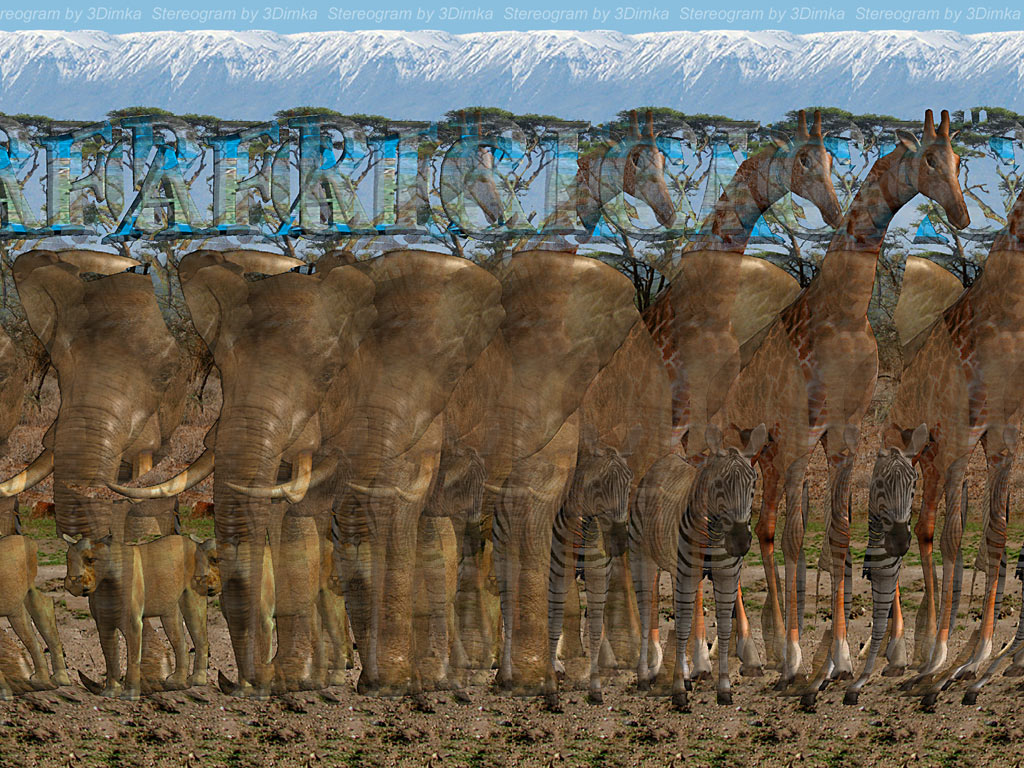
What is hidden in 3D image?
[3924] What is hidden in 3D image? - Stereogram - 3D Image - #brainteasers #stereogram #3Dimage
BRAIN TEASERS

What is hidden in 3D image?

Stereogram - 3D Image
#brainteasers #stereogram #3Dimage
Register with your Google Account and start collecting points.
Check your ranking on list.

A very large, old building was...

A very large, old building was being torn down in Chicago to make room for a new skyscraper.
Due to its proximity to other buildings it could not be imploded and had to be dismantled floor by floor.
While working on the 49th floor, two construction workers found a skeleton in a small closet behind the elevator shaft. They decided that they should call the police.
When the police arrived they directed them to the closet and showed them the skeleton fully clothed and standing upright. They said, "This could be Jimmy Hoffa or somebody really important."
Two days went by and the construction workers couldn't stand it any more, they had to know who they had found. They called the police station and said, "We're the two guys who found the skeleton in the closet and we want to know if it really was Jimmy Hoffa."
The cop said, "Well, it wasn't Jimmy Hoffa, but it was somebody kind of important."
"Well, who was it?"
"The 1956 Polish National Hide-and-Seek Champion!"
Jokes of the day - Daily updated jokes. New jokes every day.
Follow Brain Teasers on social networks

Brain Teasers

puzzles, riddles, mathematical problems, mastermind, cinemania...

Johann Friedrich Pfaff

Born 22 Dec 1765; died 21 Apr 1825 at age 59.German mathematician who proposed the first general method of integrating partial differential equations of the first order. Pfaff did important work on special functions and the theory of series. He developed Taylor's Theorem using the form with remainder as given by Lagrange. In 1810 he contributed to the solution of a problem due to Gauss concerning the ellipse of greatest area which could be drawn inside a given quadrilateral. His most important work on Pfaffian forms was published in 1815 when he was nearly 50, but its importance was not recognised until 1827 when Jacobi published a paper on Pfaff's method.«
This site uses cookies to store information on your computer. Some are essential to help the site properly. Others give us insight into how the site is used and help us to optimize the user experience. See our privacy policy.