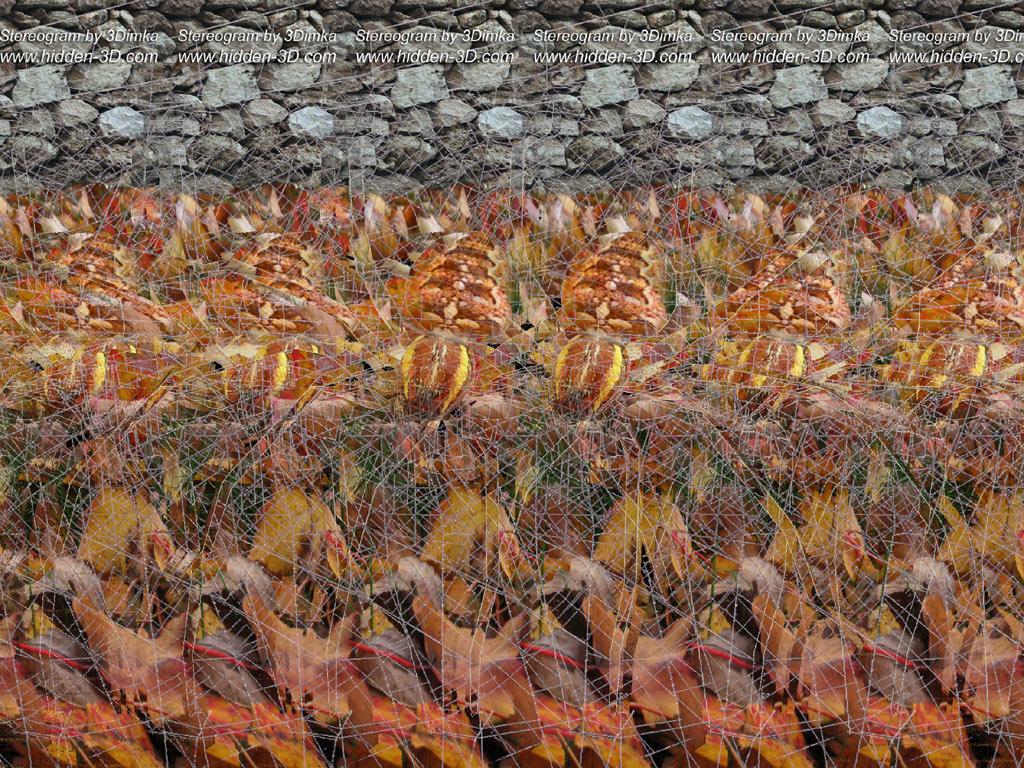
What is hidden in 3D image?
[4129] What is hidden in 3D image? - Stereogram - 3D Image - #brainteasers #stereogram #3Dimage
BRAIN TEASERS

What is hidden in 3D image?

Stereogram - 3D Image
#brainteasers #stereogram #3Dimage
Register with your Google Account and start collecting points.
Check your ranking on list.

Combat for Dummies

Advice and instructions taken from actual military sources.

'When the pin is pulled, Mr. Grenade is not our friend.' --U.S. Marine Corps
'Aim towards the enemy.' --Instruction printed on U.S. Rocket Launcher
'If the enemy is in range, so are you.' --Infantry Journal
'A slipping gear could let your m203 grenade launcher fire when you least expect it. That would make you quite unpopular in what's left of your unit.' --Army's magazine of prevention maintenance
'It is generally inadvisable to eject directly over the area you just bombed.' --U.S. Air Force manual
'Try to look unimportant; the enemy may be low on ammo.' --Infantry Journal
'Cluster bombing from B-52s is very, very accurate. The bombs are guaranteed to always hit the ground.' --USAF Ammo Troop
'Tracers work both ways.' --U.S. Army Ordnance
'Five-second fuses only last three seconds.' --Infantry Journal
'If your attack is going too well, you're walking into an ambush.' --Infantry Journal
'No combat-ready unit has ever passed inspection.' --Unknown
'Any ship can be a minesweeper....once.' --Anon
'If you see a bomb technician running, try to keep up with him.' --USAF Ammo Troop
'Never tell the platoon sergeant you have nothing to do.' --Unknown Marine Recruit
'Don't draw fire; it irritates the people around you.' --Infantry Journal
'Bravery is being the only one who knows you're afraid.' --David Hackworth

Jokes of the day - Daily updated jokes. New jokes every day.
Follow Brain Teasers on social networks

Brain Teasers

puzzles, riddles, mathematical problems, mastermind, cinemania...

Edward Davy

Born 16 Jun 1806; died 26 Jan 1885 at age 78.English physician, chemist and inventor of an electromagnetic repeater for relaying telegraphic signals (1836) and an electrochemical telegraph (1838). He turned his interest to telegraphy after studying medicine and beginning a career as a chemist. He emigrated to Adelaide, South Australia, where he was a farmer and physician.
This site uses cookies to store information on your computer. Some are essential to help the site properly. Others give us insight into how the site is used and help us to optimize the user experience. See our privacy policy.