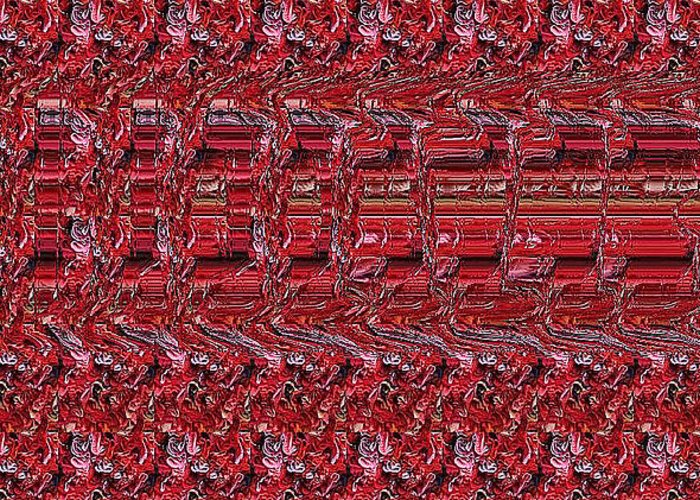
What is hidden in 3D image?
[6497] What is hidden in 3D image? - Stereogram - 3D Image - #brainteasers #stereogram #3Dimage
BRAIN TEASERS

What is hidden in 3D image?

Stereogram - 3D Image
#brainteasers #stereogram #3Dimage
Register with your Google Account and start collecting points.
Check your ranking on list.

This useful tool is commonly f...

This useful tool is commonly found in the range of 8 inches long, the functioning of which is enjoyed by members of both sexes. It is usually found hung, dangling loosely, ready for instant action. It boasts of a clump of little hairy things at one end and a small hole at the other.
In use, it is inserted, almost always willingly, sometimes slowly, sometimes quickly, into a warm, fleshy, moist opening where it is thrust in and drawn out again and again many times in succession, often quickly and accompanied by squirming bodily movements.
Anyone found listening in will most surely recognize the rhythmic, pulsing sound, resulting from the well lubricated movements. When finally withdrawn, it leaves behind a juicy, frothy, sticky white substance, some of which will need cleaning from the outer surfaces of the opening and some of from its long glistening shaft.
After everything is done and the flowing and cleansing liquids have ceased emmanating, it is returned to its freely hanging state of rest, ready for yet another bit of action, hopefully reaching its bristling climax twice or three times a day, but often much less. Ah yes, such are the characteristics of one's toothbrush!
Jokes of the day - Daily updated jokes. New jokes every day.
Follow Brain Teasers on social networks

Brain Teasers

puzzles, riddles, mathematical problems, mastermind, cinemania...

Cyril Dean Darlington

Born 19 Dec 1903; died 26 Mar 1981 at age 77. British biologist whose research on chromosomes influenced the basic concepts of the hereditary mechanisms underlying the evolution of sexually reproducing species. He elucidated the behaviour of chromosomes during the formation of gametes (meiosis). Knowing that Thomas Hunt Morgan had shown that portions of homologous chromosomes cross over (are exchanged), Darlington recognized that this applied to evolution. He formulated a theory of evolution in which the inherited characteristics of the next generation are variable, determined by this crossing over mechanism.
This site uses cookies to store information on your computer. Some are essential to help the site properly. Others give us insight into how the site is used and help us to optimize the user experience. See our privacy policy.