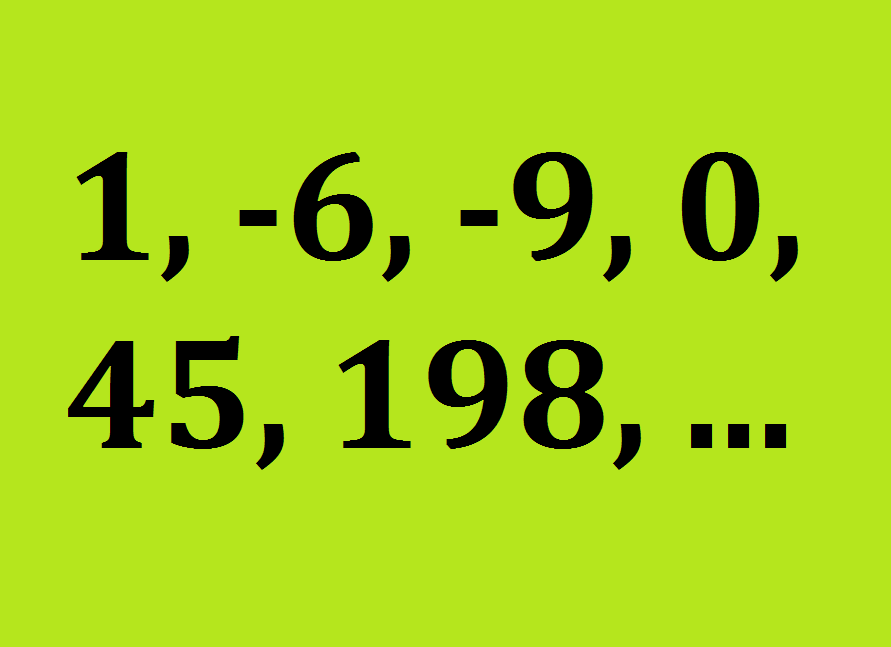
What number comes next?
Look at the series (1, -6, -9, 0, 45, 198, ?), determine the pattern, and find the value of the next number!Correct answers: 35
The first user who solved this task is Alfa Omega.
#brainteasers #math #riddles

Top 10 things NOT to say to...
Top 10 things NOT to say to parents when picking up a date
1. "Sorry I'm a little late. I had to stop by the drugstore."
2. "Show me how you used to spank her."
3. "Please come inside? Wow, you sound just like your daughter."
4. "Do you think she would put out if I told her that I loved her?"
5. "I just got my license today."
6. "I believe being sexually active since I was 12 has helped me mature."
7. "Five bucks says she's a D-cup."
8. "Hey do you have an empty pop can and some matches?"
9. "Hi. I'm Robert, but my friends call me 'Back Door Bob'."
10. "So, does your wife just lay there during sex too?"
1. "Sorry I'm a little late. I had to stop by the drugstore."
2. "Show me how you used to spank her."
3. "Please come inside? Wow, you sound just like your daughter."
4. "Do you think she would put out if I told her that I loved her?"
5. "I just got my license today."
6. "I believe being sexually active since I was 12 has helped me mature."
7. "Five bucks says she's a D-cup."
8. "Hey do you have an empty pop can and some matches?"
9. "Hi. I'm Robert, but my friends call me 'Back Door Bob'."
10. "So, does your wife just lay there during sex too?"