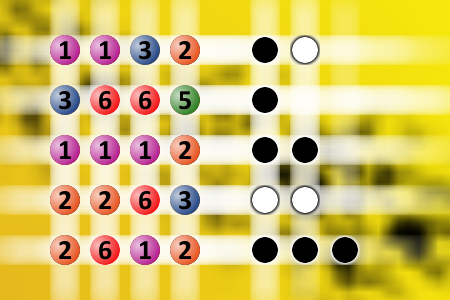
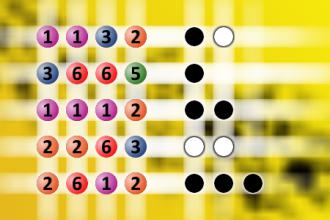
Which is a winning combination of digits?
The computer chose a secret code (sequence of 4 digits from 1 to 6). Your goal is to find that code. Black circles indicate the number of hits on the right spot. White circles indicate the number of hits on the wrong spot.
From the Blonde Files – Horseback Riding
A blonde decides to try horseback riding, even though she has had no lessons or prior experience. She mounts the horse unassisted, and the horse immediately springs into motion.
It gallops along at a steady and rhythmic pace, but the blond begins to slide from the saddle. In terror, she grabs for the horse's mane, but cannot seem to get a firm grip. She tries to throw her arms around the horse's neck, but she slides down the horse's side anyway.
The horse gallops along, seemingly oblivious of its slipping rider.
Finally, giving up her frail grip, the blond attempts to leap away from the horse and throw herself to safety. Unfortunately, her foot has become entangled in the stirrup, she is now at the mercy of the horse's pounding hooves as her head is struck against the ground over and over.
As her head is battered against the ground, she is mere moments away from unconsciousness when to her great fortune Frank, a Wal-Mart greeter, sees her dilemma and unplugs the horse.
...... And you thought all they did was say Hello.