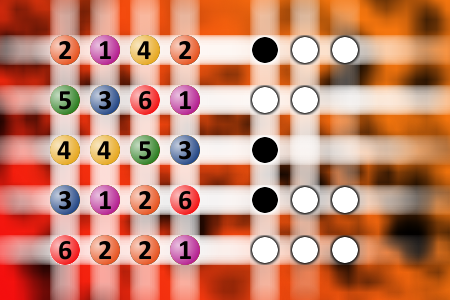
Which is a winning combination of digits?
The computer chose a secret code (sequence of 4 digits from 1 to 6). Your goal is to find that code. Black circles indicate the number of hits on the right spot. White circles indicate the number of hits on the wrong spot.Correct answers: 11
#brainteasers #mastermind

An elderly man and his wife, v...
An elderly man and his wife, vacationing at a cabin by the lake, were sitting on the porch and reminiscing about their younger years.
"This is the lake where I learned how to swim when I was a small boy," the husband said. "My father threw me into the water and I had to learn how to dog paddle to get back to the shore or drown. It was sink or swim."
"That was a cruel thing for your father to do," the wife said. "How could a loving father do such a thing to a small child? That must have been a very difficult way to learn how to swim."
"Not really," replied the husband. "Learning how to swim was the easy part. Getting out of that burlap bag first was the hard part!"
"This is the lake where I learned how to swim when I was a small boy," the husband said. "My father threw me into the water and I had to learn how to dog paddle to get back to the shore or drown. It was sink or swim."
"That was a cruel thing for your father to do," the wife said. "How could a loving father do such a thing to a small child? That must have been a very difficult way to learn how to swim."
"Not really," replied the husband. "Learning how to swim was the easy part. Getting out of that burlap bag first was the hard part!"