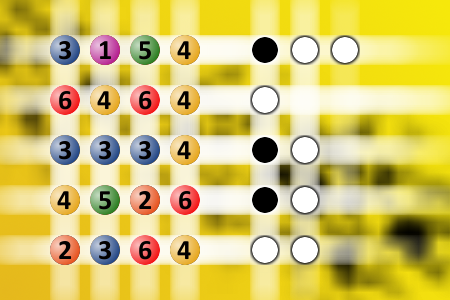
Which is a winning combination of digits?
The computer chose a secret code (sequence of 4 digits from 1 to 6). Your goal is to find that code. Black circles indicate the number of hits on the right spot. White circles indicate the number of hits on the wrong spot.Correct answers: 3
#brainteasers #mastermind

The room was full of pregnant...
The room was full of pregnant women and their partners, and the Lamaze class was in full swing. The instructor was teaching the women how to breathe properly, along with informing the men how to give the necessary assurances at this stage of the plan.
The teacher then announced, "Ladies, exercise is good for you. Walking is especially beneficial. And, gentlemen, it wouldn't hurt you to take the time to go walking with your partner!"
The room really got quiet. Finally, a man in the middle of the group raised his hand.
"Yes?" replied the teacher.
"Is it alright if she carries a golf bag while we walk?"
The teacher then announced, "Ladies, exercise is good for you. Walking is especially beneficial. And, gentlemen, it wouldn't hurt you to take the time to go walking with your partner!"
The room really got quiet. Finally, a man in the middle of the group raised his hand.
"Yes?" replied the teacher.
"Is it alright if she carries a golf bag while we walk?"