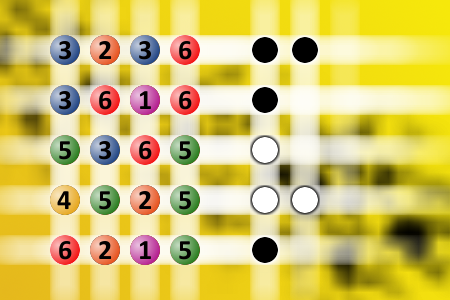
Which is a winning combination of digits?
The computer chose a secret code (sequence of 4 digits from 1 to 6). Your goal is to find that code. Black circles indicate the number of hits on the right spot. White circles indicate the number of hits on the wrong spot.Correct answers: 3
#brainteasers #mastermind

Can We....
On their way to get married, a young Catholic couple is involved in a fatal car accident. The couple find themselves sitting outside the Pearly Gates waiting for St. Peter to process them into Heaven.
While waiting, they begin to wonder: Could they possibly get married in Heaven?
When St. Peter showed up, they asked him. St. Peter said, ‘I don’t know. This is the first time anyone has asked. Let me go find out,’ and he leaves.
The couple sat and waited, and waited. Two months passed and the couple are still waiting. While waiting, they began to wonder what would happen if it didn’t work out; could you get a divorce in heaven.
After yet another month, St. Peter finally returns, looking somewhat bedraggled. ‘Yes,’ he informs the couple, ‘you can get married in Heaven.’
‘Great!’ said the couple, ‘But we were just wondering, what if things don’t work out? Could we also get a divorce in Heaven?’
St. Peter, red-faced with anger, slammed his clipboard onto the ground.
While waiting, they begin to wonder: Could they possibly get married in Heaven?
When St. Peter showed up, they asked him. St. Peter said, ‘I don’t know. This is the first time anyone has asked. Let me go find out,’ and he leaves.
The couple sat and waited, and waited. Two months passed and the couple are still waiting. While waiting, they began to wonder what would happen if it didn’t work out; could you get a divorce in heaven.
After yet another month, St. Peter finally returns, looking somewhat bedraggled. ‘Yes,’ he informs the couple, ‘you can get married in Heaven.’
‘Great!’ said the couple, ‘But we were just wondering, what if things don’t work out? Could we also get a divorce in Heaven?’
St. Peter, red-faced with anger, slammed his clipboard onto the ground.
‘What’s wrong?’ asked the frightened couple.
‘OH, COME ON!’, St. Peter shouted, ‘It took me three months to find a priest up here! Do you have any idea how long it’ll take me to find a lawyer?