Calculate the number 350
[932] Calculate the number 350 - NUMBERMANIA: Calculate the number 350 using numbers [8, 2, 3, 2, 71, 219] and basic arithmetic operations (+, -, *, /). Each of the numbers can be used only once. - #brainteasers #math #numbermania - Correct Answers: 37 - The first user who solved this task is Sanja Šabović
BRAIN TEASERS
enter your answer and press button OK

Calculate the number 350

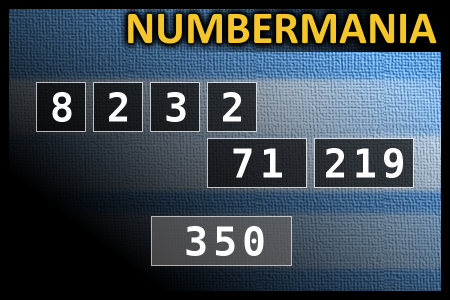
NUMBERMANIA: Calculate the number 350 using numbers [8, 2, 3, 2, 71, 219] and basic arithmetic operations (+, -, *, /). Each of the numbers can be used only once.
Correct answers: 37
The first user who solved this task is Sanja Šabović.
#brainteasers #math #numbermania
Register with your Google Account and start collecting points.
Check your ranking on list.

That Darn Cat

A man who absolutely hated his wife's cat decided to get rid of him one day by driving him 20 blocks from his home and leaving him at the park.
As he was nearing home, the cat was walking up the driveway.
The next day, he decided to drive the cat 40 blocks away and try the same thing.
As we was driving back into his driveway, there was the cat! He kept taking the cat farther and farther away, but the darn cat would always beat him home.
At last, he decided to drive a few miles away, turn right, then left, past the bridge, then right again and another right and so on until he reached what he thought was a safe distance from his home and he left the cat there.
Hours later, the man calls home to his wife: "Jen, is the cat there?"
"Yes," the wife answers. "Why do you ask?"
Frustrated, the man answers: "Put that damn cat on the phone. I'm lost and I need directions!"      

Jokes of the day - Daily updated jokes. New jokes every day.
Follow Brain Teasers on social networks

Brain Teasers

puzzles, riddles, mathematical problems, mastermind, cinemania...

Filippo Silvestri

Died 10 Jun 1949 at age 75 (born 22 Jun 1873).Italian entomologist, best remembered for his pioneering work in polyembryony, the development of more than one individual from a single fertilized egg cell. During the late 1930s Silvestri discovered that this type of reproduction occurs in the insect species Litomatix truncatellus. His finding, resulting from a close analysis of the reproductive stages, cell division, and egg structure of these parasitic hymenopterans, attracted the attention of many biologists because of its implications for the nature of the egg and the causes of multiple generation. He also studied the morphology and biology of the Termitidae, the most highly evolved family of termites. He also made a comparative study of the form and structure of the millipede and the centipede.
This site uses cookies to store information on your computer. Some are essential to help the site properly. Others give us insight into how the site is used and help us to optimize the user experience. See our privacy policy.