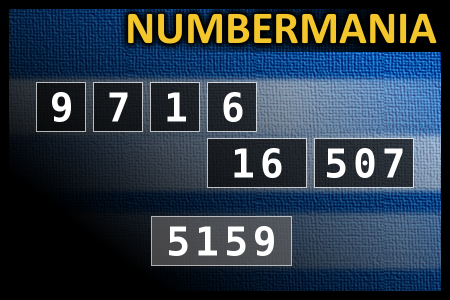
Calculate the number 5159
[1415] Calculate the number 5159 - NUMBERMANIA: Calculate the number 5159 using numbers [9, 7, 1, 6, 16, 507] and basic arithmetic operations (+, -, *, /). Each of the numbers can be used only once. - #brainteasers #math #numbermania - Correct Answers: 29 - The first user who solved this task is Sanja Šabović
BRAIN TEASERS
enter your answer and press button OK

Calculate the number 5159

NUMBERMANIA: Calculate the number 5159 using numbers [9, 7, 1, 6, 16, 507] and basic arithmetic operations (+, -, *, /). Each of the numbers can be used only once.
Correct answers: 29
The first user who solved this task is Sanja Šabović.
#brainteasers #math #numbermania
Register with your Google Account and start collecting points.
Check your ranking on list.

Experimental Pill

A lady goes to the doctor and complains her husband is losing interest in sex.
He gives her a pill but warns her that it's still experimental. He tells her to slip it in his mashed potatoes at dinner. At dinner that night, she does just that.
About a week later she's back at the doctor and tells him, "The pill worked great! I put it in his mashed potatoes like you said.
It wasn't five minutes later that he jumped up, pushed all the food and dishes to the floor, grabbed me, ripped off all my clothes and ravaged me right there on the table."
The doctor says, "Oh dear -- I'm sorry, we didn't realize the pill
was that strong. The foundation will be glad to pay for any damages."

The lady replied, "That's very kind - but I don't think the restaurant will let us back in anyway."

Jokes of the day - Daily updated jokes. New jokes every day.
Follow Brain Teasers on social networks

Brain Teasers

puzzles, riddles, mathematical problems, mastermind, cinemania...

Wolfgang Paul

Born 10 Aug 1913; died 6 Dec 1993 at age 80.German physicist who developed the Paul trap, an electromagnetic device that captures ions and holds them long enough for study and precise measurement of their properties. During the 1950s he developed the so-called Paul trap as a means of confining and studying electrons. The device consists of three electrodes - two end caps and an encircling ring. The ring is connected to an oscillating potential. The direction of the electric field alternates; for half the time the electron is pushed from the caps to the ring and for the other half it is pulled from the ring and pushed towards the caps. For his work he shared the 1989 Nobel Prize for Physics with Hans Georg Dehmelt and Norman F. Ramsey.
This site uses cookies to store information on your computer. Some are essential to help the site properly. Others give us insight into how the site is used and help us to optimize the user experience. See our privacy policy.