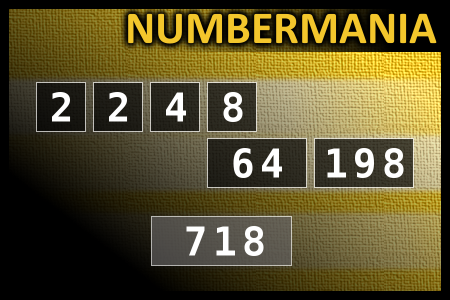
Calculate the number 718
[1121] Calculate the number 718 - NUMBERMANIA: Calculate the number 718 using numbers [2, 2, 4, 8, 64, 198] and basic arithmetic operations (+, -, *, /). Each of the numbers can be used only once. - #brainteasers #math #numbermania - Correct Answers: 32 - The first user who solved this task is Sanja Šabović
BRAIN TEASERS
enter your answer and press button OK

Calculate the number 718

NUMBERMANIA: Calculate the number 718 using numbers [2, 2, 4, 8, 64, 198] and basic arithmetic operations (+, -, *, /). Each of the numbers can be used only once.
Correct answers: 32
The first user who solved this task is Sanja Šabović.
#brainteasers #math #numbermania

Register with your Google Account and start collecting points.
Check your ranking on list.

Bad Pop Rocks

Cassie was taking two of her grandsons on their very first train ride from Dayton, Ohio to Washington, DC.

A vendor came down the corridor selling Pop Rocks, something neither had ever seen before.

Cassie bought each one a bag.

The first one eagerly tore open the bag and popped one into his mouth just as the train went into a tunnel.

When the train emerged from the tunnel, he looked across to his brother and said: "I wouldn't eat that if I were you."

"Why not?" replied the curious brother

"I took one bite and went blind for half a minute."

Jokes of the day - Daily updated jokes. New jokes every day.
Follow Brain Teasers on social networks

Brain Teasers

puzzles, riddles, mathematical problems, mastermind, cinemania...

Cavendish Laboratory

In 1874, the Cavendish Laboratory was opened at the University of Cambridge, England. It was built as a teaching laboratory with a regular course of instruction - a new idea for the time. Until then, much of experimental physics was conducted as individual work in essentially private laboratories. Joule and Cavendish, for example, set up their facilities in their own home, at their own expense. An early exception was the laboratory at the University of Glasgow established in the 1840's by William Thompson (later Lord Kelvin). The first Cavendish Professor (1871-1879) was James Clerk-Maxwell, followed by Lord Rayleigh (1879-1884), who both much expanded knowledge of physics. The third Cavendish Professor was J.J. Thomson, discoverer of the electron.«*
This site uses cookies to store information on your computer. Some are essential to help the site properly. Others give us insight into how the site is used and help us to optimize the user experience. See our privacy policy.