Calculate the number 744
[1228] Calculate the number 744 - NUMBERMANIA: Calculate the number 744 using numbers [4, 2, 6, 9, 61, 737] and basic arithmetic operations (+, -, *, /). Each of the numbers can be used only once. - #brainteasers #math #numbermania - Correct Answers: 38 - The first user who solved this task is Sanja Šabović
BRAIN TEASERS
enter your answer and press button OK

Calculate the number 744

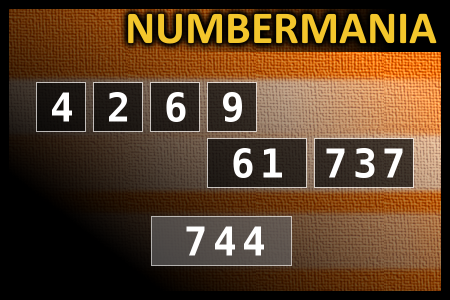
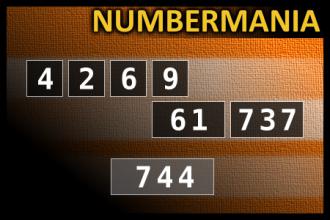
NUMBERMANIA: Calculate the number 744 using numbers [4, 2, 6, 9, 61, 737] and basic arithmetic operations (+, -, *, /). Each of the numbers can be used only once.
Correct answers: 38
The first user who solved this task is Sanja Šabović.
#brainteasers #math #numbermania
Register with your Google Account and start collecting points.
Check your ranking on list.

Fishing in a puddle

The rain was pouring and there was a big puddle in front of the pub.

A ragged old man was standing there with a rod and hanging a string into the puddle.

A tipsy- looking, curious gentleman came over to him and asked what he was doing.

'Fishing,' the old man said simply.

'Poor old fool,' the gentleman thought and he invited the ragged old man to a drink in the pub.

As he felt he should start some conversation while they were sipping their whiskey, the gentleman asked,

'And how many have you caught?'

‘You're the eighth.‘

Found on Tell Funny Stories - A willing victim letting himself be caught joke, posted October 24, 2010

Jokes of the day - Daily updated jokes. New jokes every day.
Follow Brain Teasers on social networks

Brain Teasers

puzzles, riddles, mathematical problems, mastermind, cinemania...

Sir Alastair Pilkington

Born 7 Jan 1920; died 5 May 1995 at age 75. Sir Lionel Alexander Bethune Pilkington was a British industrialist and inventor who invented the float glass process, practical for industry, which replaced the former method for making plate glass. He developed his idea from the mid-1950s and announced it to the public in 1959. It took three years longer to reach consistent, profitable production In 1962, the process was licenced for use in the USA, followed shortly by the rest of the world. Flat glass with brilliant, parallel surfaces was manufactured from a continuous ribbon of molten glass moving out of the furnace and floating on a long bed of molten tin. While on this bed, the glass remained hot for a long enough time for irregularities to smooth out, eliminating the need for later polishing. He was knighted in 1970.«
This site uses cookies to store information on your computer. Some are essential to help the site properly. Others give us insight into how the site is used and help us to optimize the user experience. See our privacy policy.