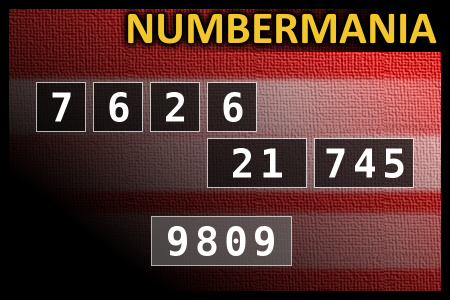
Calculate the number 9809
[1523] Calculate the number 9809 - NUMBERMANIA: Calculate the number 9809 using numbers [7, 6, 2, 6, 21, 745] and basic arithmetic operations (+, -, *, /). Each of the numbers can be used only once. - #brainteasers #math #numbermania - Correct Answers: 29 - The first user who solved this task is Sanja Šabović
BRAIN TEASERS
enter your answer and press button OK

Calculate the number 9809

NUMBERMANIA: Calculate the number 9809 using numbers [7, 6, 2, 6, 21, 745] and basic arithmetic operations (+, -, *, /). Each of the numbers can be used only once.
Correct answers: 29
The first user who solved this task is Sanja Šabović.
#brainteasers #math #numbermania
Register with your Google Account and start collecting points.
Check your ranking on list.

Be My Valentine

A guy walks into a post office one day to see a middle-aged, balding man standing at the counter methodically placing "Love" stamps on bright pink envelopes with hearts all over them. He then takes out a perfume bottle and starts spraying scent all over them.
His curiosity getting the better of him, he goes up to the balding man and asks him what he is doing. The man says, "I'm sending out 1,000 Valentine cards signed, 'Guess who?'"
"But why?" asks the man.
"I'm a divorce lawyer," the man replies.
Jokes of the day - Daily updated jokes. New jokes every day.
Follow Brain Teasers on social networks

Brain Teasers

puzzles, riddles, mathematical problems, mastermind, cinemania...

Edwin G. Boring

Died 1 Jul 1968 at age 81 (born 23 Oct 1886). Edwin Garrigues Boring was an American psychologist who was first recognized for his experimental work but later known as a historian of psychology. When the U.S. entered WW I, Robert M. Yerkes recruited Boring to help test the intelligence of draftees. In 1922, he was invited to Harvard, where he began a long and productive career as director of the psychological laboratory (1924-49). To free psychology from its status as part of the Dept. of Philosophy, Boring succeeded in establishing a separate Dept of Psychology (1934). Upon retirement, he was appointed Edgar Pierce Professor Emeritus and continued to teach classes until he was nearly 71. Throughout his life, he wrote textbooks and edited professional journals.
This site uses cookies to store information on your computer. Some are essential to help the site properly. Others give us insight into how the site is used and help us to optimize the user experience. See our privacy policy.