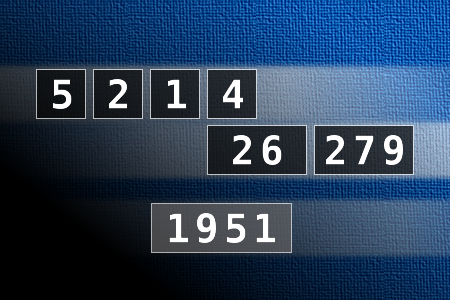
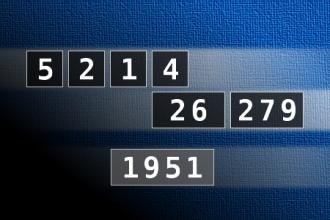
Calculate the number 1951
NUMBERMANIA: Calculate the number 1951 using numbers [5, 2, 1, 4, 26, 279] and basic arithmetic operations (+, -, *, /). Each of the numbers can be used only once.
16 Jokes to celebrate Hug an Australian Day!
1.Q: Why are murders in Tasmania so hard to solve?
A: Because there are no dental records and all the DNA matches.
2.A British man is visiting Australia. The customs agent asks him, “Do you have a criminal record?” The British man replies, “I didn’t think you needed one to get into Australia anymore.”
3.Q: If someone who speaks two languages is bilingual, and someone who speaks many languages is multilingual, then what do you call someone who speaks one language?
A: Australian!
4.Q: How many Aussies does it take to screw in a lightbulb?
A: Three. One to hold the bulb and two to turn the ladder.
5.Q: What do you call an Aussie in the finals of the World Cup?
A: The referee.
6.Q: What do you call a farting Aussie?
A: Ned Smelly
7.Q: What's the difference between Cinderella and Melbourne FC?
A: Cinderella wanted to get to the ball
8.An Aussie said, “Take away your snow capped mountains, culture, and good food, and what would New Zealand be?”
The kiwi answered, “Australia”.
9.Q: What do you call an Aussie with 100 girlfriends?
A: A farmer
10.Q: Why is Australia such a dry country?
A: We don't have a king or queen to reign on it.
11.Two Aussies are drinking together. One says, “When I die, will you promise to pour a beer on my grave?”
The other replies, “No worries mate, but I’ll have to pass it through my kidneys first.”
12.Q: Why did Tasmanians evolve to grow two heads?
A: So they can have an intelligent conversation when they visit the mainland!
13.Q: Where can someone visit for 2 hours in Melbourne.
A: St Kilda via Punt Road.
14.Q: Want to hear a joke about the construction industry in Australia?
A: Too bad, they're still working on it!
15.Q: How do you know when you're a hipster bogan?
A: When your coffee machine costs more than your washing machine.
16.Here's something you didn't know...Your taxi driver was a surgeon before arriving in Australia.
#HuganAustralianDay