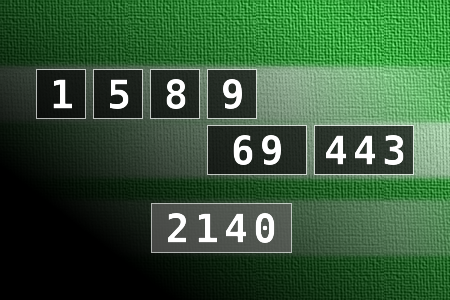
Calculate the number 2140
NUMBERMANIA: Calculate the number 2140 using numbers [1, 5, 8, 9, 69, 443] and basic arithmetic operations (+, -, *, /). Each of the numbers can be used only once.Correct answers: 23
The first user who solved this task is Rutu Raj.
#brainteasers #math #numbermania

The woman entered the room, an...
The woman entered the room, and with a knowing smile teasing her full lips, she sank into the comfort of the plush chair in the corner.
The handsome stranger turned, having sensed her approach.
Locking his steely grey eyes on hers, he moved slowly toward her, his experienced gaze measuring her, hypnotizing her with his soft murmurs of assurance.
He sank to his knees before her and without a word, smoothly released her from her constraining attire. With a sigh of surrender, she allowed his foreign hands to unleash her bare flesh. He expertly guided her through this tender, new territory, boldly taking her to heights she had never dared to dream of, his movements deliberate, confident in his ability to satisfy her every need.
Her senses swam. She was overcome with an aching desire that had gone unfulfilled for so long. And, just as it seemed that ecstasy was within her grasp, he paused, and for one heart-stopping moment, she thought, "It's too big! - it will never fit!"Then, with a sudden rush, it slid into place as if it had been made only for her. As pleasure and contentment washed over her, she met his steady gaze, tears of gratitude shining in her eyes.
And he knew it wouldn't be long before she returned. Oh, yes, this woman would want more. She would want to do it again and again and again...
Don't you just love shopping for shoes?
The handsome stranger turned, having sensed her approach.
Locking his steely grey eyes on hers, he moved slowly toward her, his experienced gaze measuring her, hypnotizing her with his soft murmurs of assurance.
He sank to his knees before her and without a word, smoothly released her from her constraining attire. With a sigh of surrender, she allowed his foreign hands to unleash her bare flesh. He expertly guided her through this tender, new territory, boldly taking her to heights she had never dared to dream of, his movements deliberate, confident in his ability to satisfy her every need.
Her senses swam. She was overcome with an aching desire that had gone unfulfilled for so long. And, just as it seemed that ecstasy was within her grasp, he paused, and for one heart-stopping moment, she thought, "It's too big! - it will never fit!"Then, with a sudden rush, it slid into place as if it had been made only for her. As pleasure and contentment washed over her, she met his steady gaze, tears of gratitude shining in her eyes.
And he knew it wouldn't be long before she returned. Oh, yes, this woman would want more. She would want to do it again and again and again...
Don't you just love shopping for shoes?