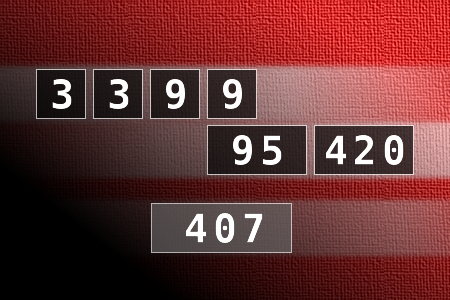
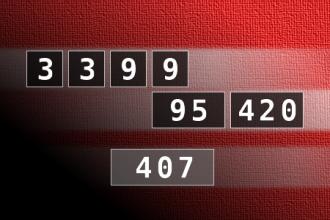
Calculate the number 407
NUMBERMANIA: Calculate the number 407 using numbers [3, 3, 9, 9, 95, 420] and basic arithmetic operations (+, -, *, /). Each of the numbers can be used only once.Correct answers: 21
The first user who solved this task is Djordje Timotijevic.
#brainteasers #math #numbermania

A little boy asked his teacher...
A little boy asked his teacher if he could go to the bathroom,so she said yes. When he went to wipe his bum there was no toilet paper so he used his hands. When he got back to class his teacher asked, 'What do you have in your hand.'The boy said, 'A little leprechaun and if I open my hand he'll get scared away.'
He was then sent to the principals office and the principal asked him, 'What do you have in your hand.'
So the little boy said, 'A little leprechaun and if I open my hands he'll get scared away.' He was sent home and his mom asked him 'What do you have in your hand.'
So the little boy said, 'A little leprechaun and if I open my hands he'll get scared away.' He was sent to his room and his dad came in and said, 'What do you have in your hand.' So again the little boy said, 'A little leprechaun and if I open my hands he get scared away.'
Then his Dad got really mad and yelled, 'Open your hands!'
And the little boy said, 'Look Dad you scared the crap out of him.'
He was then sent to the principals office and the principal asked him, 'What do you have in your hand.'
So the little boy said, 'A little leprechaun and if I open my hands he'll get scared away.' He was sent home and his mom asked him 'What do you have in your hand.'
So the little boy said, 'A little leprechaun and if I open my hands he'll get scared away.' He was sent to his room and his dad came in and said, 'What do you have in your hand.' So again the little boy said, 'A little leprechaun and if I open my hands he get scared away.'
Then his Dad got really mad and yelled, 'Open your hands!'
And the little boy said, 'Look Dad you scared the crap out of him.'