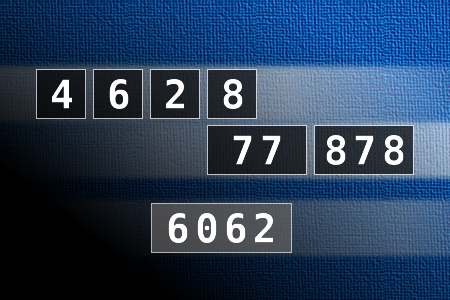
Calculate the number 6062
[4172] Calculate the number 6062 - NUMBERMANIA: Calculate the number 6062 using numbers [4, 6, 2, 8, 77, 878] and basic arithmetic operations (+, -, *, /). Each of the numbers can be used only once. - #brainteasers #math #numbermania - Correct Answers: 17 - The first user who solved this task is Djordje Timotijevic
BRAIN TEASERS
enter your answer and press button OK

Calculate the number 6062

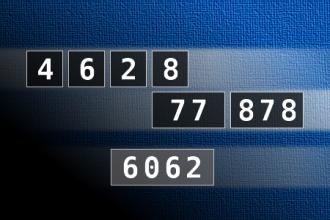
NUMBERMANIA: Calculate the number 6062 using numbers [4, 6, 2, 8, 77, 878] and basic arithmetic operations (+, -, *, /). Each of the numbers can be used only once.
Correct answers: 17
The first user who solved this task is Djordje Timotijevic.
#brainteasers #math #numbermania
Register with your Google Account and start collecting points.
Check your ranking on list.

Chuck Norris, Arnold Swartzena...

Chuck Norris, Arnold Swartzenagger, and Jean Claud VanDam, were talking one day. Chuck Norris asked, "If you were a musician, who would you be?".
Chuck Norris said, "I would be Motzart."
Jean Claud VanDam said, "I would be Bethoven."
Arnold then said, "I'll be Bach!"
Jokes of the day - Daily updated jokes. New jokes every day.
Follow Brain Teasers on social networks

Brain Teasers

puzzles, riddles, mathematical problems, mastermind, cinemania...

Wilhelm Eduard Weber

Died 23 Jun 1891 at age 86 (born 24 Oct 1804). German physicist who investigated terrestrial magnetism. For six years, from 1831, Weber worked in close collaboration with Carl Gauss. Weber developed sensitive magnetometers, an electromagnetic telegraph (1833) and other magnetic instruments during this time. His later work (1855) on the ratio between the electrodynamic and electrostatic units of charge proved extremely important and was crucial to James Clerk Maxwell in his electromagnetic theory of light. (Weber found the ratio was 3.1074 x 10⁸ m/sec but failed to take any notice of the fact that this was close to the speed of light.) Weber's later years were devoted to work in electrodynamics and the electrical structure of matter. The magnetic unit, weber, is named after him.
This site uses cookies to store information on your computer. Some are essential to help the site properly. Others give us insight into how the site is used and help us to optimize the user experience. See our privacy policy.