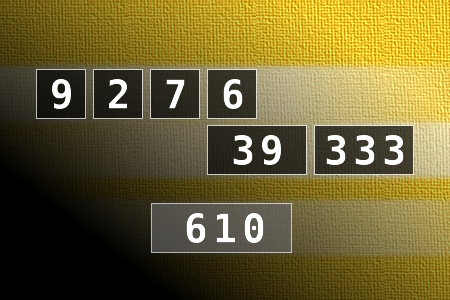
Calculate the number 610
NUMBERMANIA: Calculate the number 610 using numbers [9, 2, 7, 6, 39, 333] and basic arithmetic operations (+, -, *, /). Each of the numbers can be used only once.Correct answers: 17
The first user who solved this task is Djordje Timotijevic.
#brainteasers #math #numbermania

A little old lady answered a k...
A little old lady answered a knock on the door one day, only to be confronted by a well-dressed young man carrying a vacuum cleaner. 'Good morning,' said the young man. 'If I could take a couple of minutes of your time, I would like to demonstrate the very latest in high-powered vacuum cleaners.'
'Go away!' said the old lady. ''I'm broke and haven't got any money!'' and she proceeded to close the door. Quick as a flash, the young man wedged his foot in the door and pushed it wide open. ''Don't be too hasty!'' he said. ''Not until you have at least seen my demonstration.'' And with that, he emptied a bucket of horse manure onto her hallway carpet. ''Now, if this vacuum cleaner does not remove all traces of this horse manure from your carpet, Madam, I will personally eat the remainder.''
The old lady stepped back and said, ''Well let me get you a fork, 'cause they cut off my electricity this morning!
'Go away!' said the old lady. ''I'm broke and haven't got any money!'' and she proceeded to close the door. Quick as a flash, the young man wedged his foot in the door and pushed it wide open. ''Don't be too hasty!'' he said. ''Not until you have at least seen my demonstration.'' And with that, he emptied a bucket of horse manure onto her hallway carpet. ''Now, if this vacuum cleaner does not remove all traces of this horse manure from your carpet, Madam, I will personally eat the remainder.''
The old lady stepped back and said, ''Well let me get you a fork, 'cause they cut off my electricity this morning!