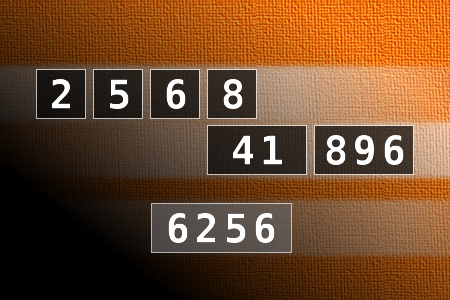
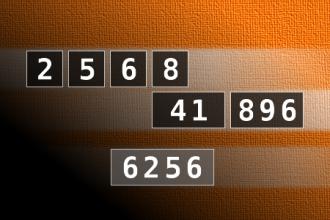
Calculate the number 6256
[7674] Calculate the number 6256 - NUMBERMANIA: Calculate the number 6256 using numbers [2, 5, 6, 8, 41, 896] and basic arithmetic operations (+, -, *, /). Each of the numbers can be used only once. - #brainteasers #math #numbermania - Correct Answers: 1
BRAIN TEASERS
enter your answer and press button OK

Calculate the number 6256

NUMBERMANIA: Calculate the number 6256 using numbers [2, 5, 6, 8, 41, 896] and basic arithmetic operations (+, -, *, /). Each of the numbers can be used only once.
Correct answers: 1
#brainteasers #math #numbermania
Register with your Google Account and start collecting points.
Check your ranking on list.

A game of baseball

St. Peter and Satan were having an argument one day about baseball. Satan proposed a game to be played on neutral grounds between a select team from the heavenly host and his own hand-picked boys.

"Very well," said the gatekeeper of Heaven. "But you realize, I hope, that we've got all the good players and the best coaches."

"I know, and that's all right," Satan answered unperturbed. "We've got all the umpires."

Jokes of the day - Daily updated jokes. New jokes every day.
Follow Brain Teasers on social networks

Brain Teasers

puzzles, riddles, mathematical problems, mastermind, cinemania...

Louis Winslow Austin

Died 27 Jun 1932 at age 64 (born 30 Oct 1867).American physicist known for research on long-range radio transmissions. In 1904 he began work on radio transmissions for the U.S. Bureau of Standards. In 1908 Austin became head of a naval radiotelegraphy laboratory (later to become the Naval Research Laboratory) and became chief of the bureau's laboratory for special radio transmission research (1923-32). His work involved long-range transmission experiments, most notably a study (1910) that tested radio contact between ships travelling between the US and Liberia. Austin and collaborator Louis Cohen developed the Austin-Cohen formula for predicting the strength of radio signals at long distances. Austin's later work centred on the study of radio atmospheric disturbances, i.e., "static."
This site uses cookies to store information on your computer. Some are essential to help the site properly. Others give us insight into how the site is used and help us to optimize the user experience. See our privacy policy.