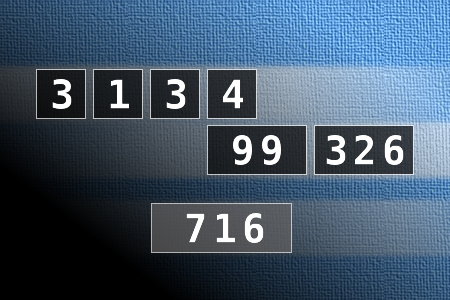
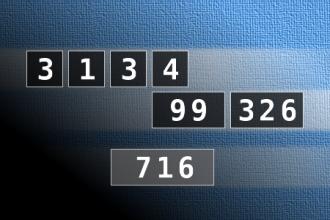
Calculate the number 716
[2962] Calculate the number 716 - NUMBERMANIA: Calculate the number 716 using numbers [3, 1, 3, 4, 99, 326] and basic arithmetic operations (+, -, *, /). Each of the numbers can be used only once. - #brainteasers #math #numbermania - Correct Answers: 37 - The first user who solved this task is Fazil Hashim
BRAIN TEASERS
enter your answer and press button OK

Calculate the number 716

NUMBERMANIA: Calculate the number 716 using numbers [3, 1, 3, 4, 99, 326] and basic arithmetic operations (+, -, *, /). Each of the numbers can be used only once.
Correct answers: 37
The first user who solved this task is Fazil Hashim.
#brainteasers #math #numbermania
Register with your Google Account and start collecting points.
Check your ranking on list.

Angelic Assistance?

An old-time pastor was riding furiously down the road, hurrying to get to church on time. Suddenly, his horse stumbled and threw him to the ground.Lying in the dirt, his body wracked with pain, the pastor called out, “All you angels in heaven, help me get up on my horse!”With extraordinary strength, he leaped onto the horse’s back—and fell off the other side.From the ground again, he called out, “All right, just half of you angels this time!”
Jokes of the day - Daily updated jokes. New jokes every day.
Follow Brain Teasers on social networks

Brain Teasers

puzzles, riddles, mathematical problems, mastermind, cinemania...

Charles Thomas Jackson

Born 21 Jun 1805; died 28 Aug 1880 at age 75. American physician, chemist, and pioneer geologist and mineralogist. Jackson's professional career consisted of a series of spectacular claims to the work of others which continued until he finally became insane in 1873. In 1832, during a voyage, he discussed with the portrait painter Samuel Morse the possibilities of electric telegraphy. Morse exhibited his telegraph to Congress in 1837 but had to spend seven years to establish a right to his own invention against Jackson's claim that Morse had stolen it from him. Jackson similarly claimed priority in the idea of use of ether as an anaesthetic, which he had suggested to a dentist, William Morton. Though the effects of ether were somewhat known at the time, it was Morton who made the idea practical.
This site uses cookies to store information on your computer. Some are essential to help the site properly. Others give us insight into how the site is used and help us to optimize the user experience. See our privacy policy.