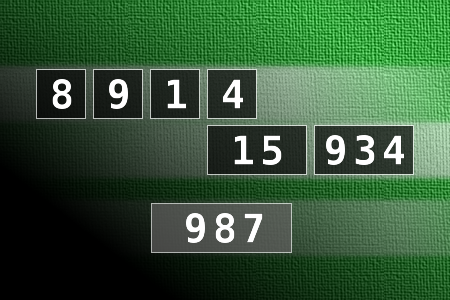
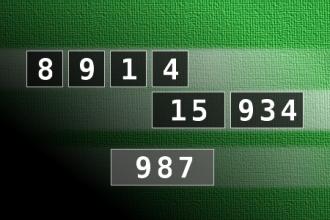
Calculate the number 987
[7549] Calculate the number 987 - NUMBERMANIA: Calculate the number 987 using numbers [8, 9, 1, 4, 15, 934] and basic arithmetic operations (+, -, *, /). Each of the numbers can be used only once. - #brainteasers #math #numbermania - Correct Answers: 1
BRAIN TEASERS
enter your answer and press button OK

Calculate the number 987

NUMBERMANIA: Calculate the number 987 using numbers [8, 9, 1, 4, 15, 934] and basic arithmetic operations (+, -, *, /). Each of the numbers can be used only once.
Correct answers: 1
#brainteasers #math #numbermania
Register with your Google Account and start collecting points.
Check your ranking on list.

A blonde is terribly overweigh...

A blonde is terribly overweight, so her doctor puts her on a diet. "I want you to eat regularly for 2 days, then skip a day, and repeat this procedure for 2 weeks. The next time I see you, you'll have lost at least 5 pounds."
When the blonde returned, she shocked the doctor by losing nearly 20 pounds. "Why, that's amazing!" the doctor said, "Did you follow my instructions?"
The blonde nodded, "I'll tell you though, I thought I was going to drop dead that 3rd day."
"From hunger, you mean?" asked the doctor.
"No, from all that skipping."
Jokes of the day - Daily updated jokes. New jokes every day.
Follow Brain Teasers on social networks

Brain Teasers

puzzles, riddles, mathematical problems, mastermind, cinemania...

Radioactive medicine

In 1936, the first radioactive isotope medicine was administered, Berkeley, Cal. When Ernest Lawrence, inventor of the cyclotron, recognized the possibilities for uses of nuclear isotopes in medicine, he persuaded his brother John to join the Berkeley Laboratory. John Lawrence started Donner Laboratory circa 1936. Treating a 28-yr-old woman with chronic leukemia, he administered a radioactive isotope of phosphorus-32 that had been artificially produced in a 37-in cyclotron. It was the first time that a radioactive isotope had been used in the treatment of a human disease as well as the start of a career-long contribution from John Lawrence. He became known as the father of nuclear medicine and his laboratory is considered the birthplace of this field.
This site uses cookies to store information on your computer. Some are essential to help the site properly. Others give us insight into how the site is used and help us to optimize the user experience. See our privacy policy.