Find the right combination
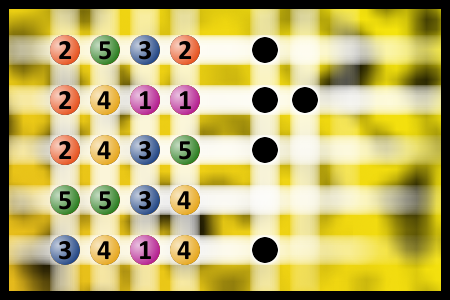
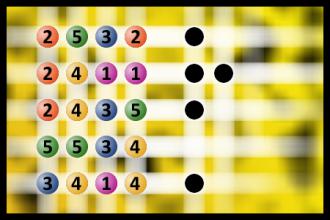
[1244] Find the right combination - The computer chose a secret code (sequence of 4 digits from 1 to 6). Your goal is to find that code. Black circles indicate the number of hits on the right spot. White circles indicate the number of hits on the wrong spot. - #brainteasers #mastermind - Correct Answers: 56 - The first user who solved this task is James Lillard
BRAIN TEASERS
enter your answer and press button OK

Find the right combination

The computer chose a secret code (sequence of 4 digits from 1 to 6). Your goal is to find that code. Black circles indicate the number of hits on the right spot. White circles indicate the number of hits on the wrong spot.
Correct answers: 56
The first user who solved this task is James Lillard.
#brainteasers #mastermind
Register with your Google Account and start collecting points.
Check your ranking on list.

A woman goes to the gynecologi...

A woman goes to the gynecologist for an exam. She puts her feet into the stirrups and the doctor begins his exam.
After a moment, he says, "You have an unusually deep vagina."
The woman replies, "You don't have to say it twice."
The doctor says, "I didn't."
Jokes of the day - Daily updated jokes. New jokes every day.
Follow Brain Teasers on social networks

Brain Teasers

puzzles, riddles, mathematical problems, mastermind, cinemania...

Carl Koller

Born 3 Dec 1857; died 21 Mar 1944 at age 86.Czech-born American ophthalmic surgeon whose introduction of cocaine as a surface anesthetic in eye surgery on 16 Sep 1884 inaugurated the modern era of local anesthesia. He was a colleague of Sigmund Freud, who in 1884 was interested in the use of cocaine to cure morphine addiction. Koller noticed cocaine had a numbing effect on the tongue and, after experimenting with animals, introduced it as a local anaesthetic in ophthalmology. It was also quickly adopted for nose and throat surgery and for dentistry. Cocaine was isolated in 1859 and was synthesized in 1885. It became evident that this agent produced erosion of the corneal epithelium in high doses or with repeated use. Later, less toxic, synthetic local anesthetics such as tetracaine and proparacaine were developed.
This site uses cookies to store information on your computer. Some are essential to help the site properly. Others give us insight into how the site is used and help us to optimize the user experience. See our privacy policy.