Find the right combination
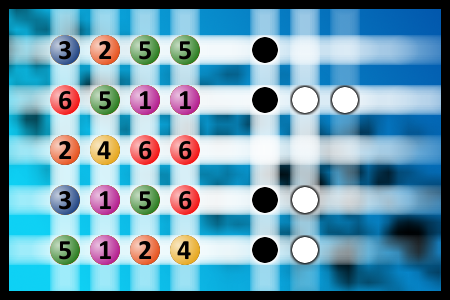
The computer chose a secret code (sequence of 4 digits from 1 to 6). Your goal is to find that code. Black circles indicate the number of hits on the right spot. White circles indicate the number of hits on the wrong spot.Correct answers: 51
The first user who solved this task is James Lillard.
#brainteasers #mastermind

A guy goes to see the doctor...
A guy goes to see the doctor, because he's a little too well-endowed. In fact, it's 25 inches long and he can't get any women to have sex with him.
Anyway, the doctor says there's nothing he can do medically, but recommends a witch doctor that he thinks might be able to help.
The witch doctor takes a look at the problem and tells him to go to a particular pond, deep in the forest, and talk to a frog that lives there. "Ask the frog to marry you and each time the frog says no, you'll be 5 inches shorter."
Worth a try, he thinks, and off he dashes into the forest. He finds the pond and sees the frog on the other side, sitting on a log. "Frog, will you marry me?"
The frog looks at him, disinterested at best, and calls back, "No."
The guy looks down and sure enough, he's 5 inches shorter. Hey, this is great he thinks -- let's try that again. "Will you marry me?"
The frog rolls his eyes, and shouts back again, "No!"
Zappo! -- the guy's down to 15 inches. Well, that's still a bit excessive, he thinks. Down another 5 would be perfect. So he calls across again, "Frog, will you marry me?"
The irritated frog yells back, "Look..how many times do I have to tell you? No, No, NO!"
Anyway, the doctor says there's nothing he can do medically, but recommends a witch doctor that he thinks might be able to help.
The witch doctor takes a look at the problem and tells him to go to a particular pond, deep in the forest, and talk to a frog that lives there. "Ask the frog to marry you and each time the frog says no, you'll be 5 inches shorter."
Worth a try, he thinks, and off he dashes into the forest. He finds the pond and sees the frog on the other side, sitting on a log. "Frog, will you marry me?"
The frog looks at him, disinterested at best, and calls back, "No."
The guy looks down and sure enough, he's 5 inches shorter. Hey, this is great he thinks -- let's try that again. "Will you marry me?"
The frog rolls his eyes, and shouts back again, "No!"
Zappo! -- the guy's down to 15 inches. Well, that's still a bit excessive, he thinks. Down another 5 would be perfect. So he calls across again, "Frog, will you marry me?"
The irritated frog yells back, "Look..how many times do I have to tell you? No, No, NO!"