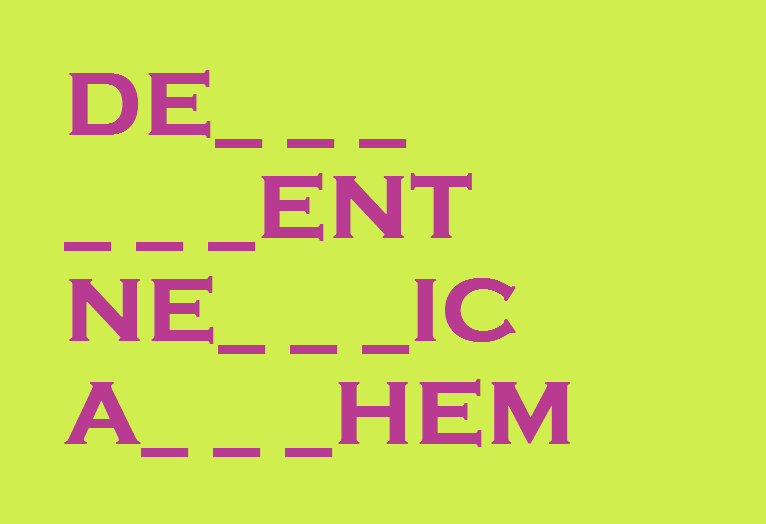
A 3-letter-word has been tak...
A 3-letter-word has been taken out of each of the following words. Can you figure it out?
Odd Rabbi Out
These four rabbis had a series of theological arguments, and three were always in accord against the fourth.
One day, the odd rabbi out, after the usual "3 to 1, majority rules" statement that signified that he had lost again, decided to appeal to a higher authority.
"Oh, God!" he cried.
"I know in my heart that I am right and they are wrong!
Please give me a sign to prove it to them!"
It was a beautiful, sunny day.
As soon as the rabbi finished his prayer, a storm cloud moved across the sky above the four.
It rumbled once and dissolved.
"A sign from God! See, I'm right, I knew it!"
But the other three disagreed, pointing out that storm clouds form on hot days.
So the rabbi prayed again: "Oh, God, I need a bigger sign to show that I am right and they are wrong. So please, God, a bigger sign!"
This time four storm clouds appeared, rushed toward each other to form one big cloud, and a bolt of lightning slammed into a tree on a nearby hill.
"I told you I was right!" cried the rabbi, but his friends insisted that nothing had happened that could not be explained by natural causes.
The rabbi was getting ready to ask for a VERY big sign, but just as he said, "Oh God...,"
the sky turned pitch black, the earth shook, and a deep, booming voice intoned, "HEEEEEEEE'S RIIIIIIIGHT!"
The rabbi put his hands on his hips, turned to the other three, and said, "Well?"
"So," shrugged one of the other rabbis, "now it's 3 to 2."