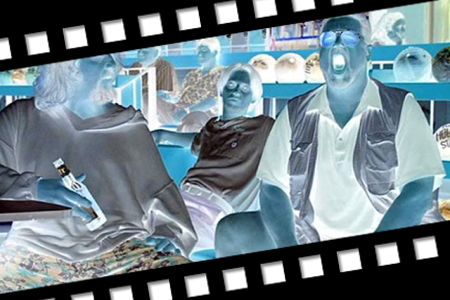
CINEMANIA: Guess the movie title
See negative of movie scene and guess the title. Length of words in solution: 3,8
United Nations Day jokes
A teenager went to United Nations for help...
The UN judge asks, "Want are you afraid of?"
He replies,"My face is so oily, I'm afraid the US would invade me."
The United Nations are putting on an event with carousels, candy floss and a ferris wheel a couple of towns away.
I wish they'd come to my town. It's UNfair.
'Knock knock'
'Who's there'
'Okay Google'
'Okay Google, who?'
'Sorry I didn't catch that'
'OKAY GOOGLE WHO?'
'The World Health Organization is a specialized agency of the United Nations that is concerned with international public health. It was established on 7 April 1948, headquartered in Geneva, Switzerland. '
Why was the United Nations concerned when the waitress dropped the platter on Thanksgiving?
It meant the fall of Turkey, the ruin of Greece, and the breakup of China.
I always tell people I work for the United Nations.
It's a better way of saying I'm U.N.employed.
The United Nations world-wide survey joke
United Nations sent out a survey to every country, asking "Would you please share your honest opinion about solutions to the food shortage in the rest of the world?"The survey flopped pretty much everywhere.
In Africa, families were confused about what "food" was.
Eastern Europeans watching state TV didn't know what "honest" meant.
In Western Europe, they didn't know what "shortage" meant.
People watching in China didn't know what an "opinion" was.
In the wartorn areas of Afghanistan and the Middle East, they didn't know what "solution" meant.
People in South America didn't know what "please" meant.
People in Russia reading the survey knew what "share" meant.
Finally, Americans didn't know what "the rest of the world" meant.