CINEMANIA: Guess the movie title
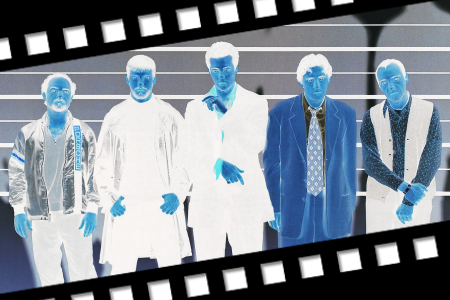
[2691] CINEMANIA: Guess the movie title - See negative of movie scene and guess the title. Length of words in solution: 3,5,8 - #brainteasers #movie #film #cinemania - Correct Answers: 38 - The first user who solved this task is Donya Sayah30
BRAIN TEASERS
enter your answer and press button OK

CINEMANIA: Guess the movie title

See negative of movie scene and guess the title. Length of words in solution: 3,5,8
Correct answers: 38
The first user who solved this task is Donya Sayah30.
#brainteasers #movie #film #cinemania
Register with your Google Account and start collecting points.
Check your ranking on list.

Heads or tails

The blonde reported for her university final examination that consists of yes/no type questions.

She takes her seat in the examination hall, stares at the question paper for five minutes and then, in a fit of inspiration, takes out her purse, removes a coin and starts tossing the coin, marking the answer sheet: Yes for heads, and no for tails.

Within half an hour she is all done, whereas the rest of the class is still sweating it out.

During the last few minutes she is seen desperately throwing the coin, muttering and sweating.

The moderator, alarmed, approaches her and asks what is going on.

"I finished the exam in half an hour, but now I'm rechecking my answers."

Submitted by Calamjo

Edited by Curtis

Jokes of the day - Daily updated jokes. New jokes every day.
Follow Brain Teasers on social networks

Brain Teasers

puzzles, riddles, mathematical problems, mastermind, cinemania...

Five-needle telegraph demonstrated

In 1837, the five-needle telegraph was demonstrated by English inventors, Charles Wheatstone and William Fothergill Cooke. They ran a six-wire telegraph line 2.4-km from Euston to Camden Town along the Great Western Railway Company railway track. They successfully transmitted and received messages. Wheatstone provided the technological skill and is better remembered in the history of the telegraph while Cooke had the business acumen. This first patent (1837) was impractical because the code used simultaneous combinations of five keys, and so was rather cumbersome, limited to only twenty letters (J, C, Q, U, X and Z were omitted). By 1845, they patented the more important single-needle electric telegraph.«
This site uses cookies to store information on your computer. Some are essential to help the site properly. Others give us insight into how the site is used and help us to optimize the user experience. See our privacy policy.