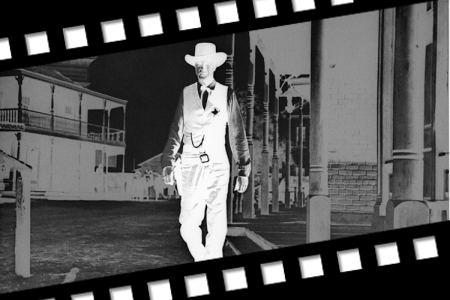
CINEMANIA: Guess the movie title
See negative of movie scene and guess the title. Length of words in solution: 4,4Correct answers: 26
The first user who solved this task is H Tav.
#brainteasers #movie #film #cinemania

A blonde pilot decided she wan...
A blonde pilot decided she wanted to learn how to fly a helicopter.
She went to the airport, but the only one available was a solo-helicopter. The Instructor figured he could let her go up alone since she was already a pilot for small planes and he could instruct her by radio.
So up the blonde went. She reached 1,000 feet and everything was going smoothly. She reached 2,000 feet. The blonde and the Instructor kept talking via radio. Everything was running smoothly. At 3,000 feet the helicopter suddenly came down quickly! It skimmed the top of some trees and crash landed in the woods. The Instructor jumped into his jeep and rushed out to see if the blonde was okay. As he reached the edge of the woods, the blonde was walking out.
"What happened?" the Instructor asked. "All was going so well until you reached 3000 feet. What happened then?"
"Well," began the blonde, "I got cold. So I turned off the ceiling fan."
She went to the airport, but the only one available was a solo-helicopter. The Instructor figured he could let her go up alone since she was already a pilot for small planes and he could instruct her by radio.
So up the blonde went. She reached 1,000 feet and everything was going smoothly. She reached 2,000 feet. The blonde and the Instructor kept talking via radio. Everything was running smoothly. At 3,000 feet the helicopter suddenly came down quickly! It skimmed the top of some trees and crash landed in the woods. The Instructor jumped into his jeep and rushed out to see if the blonde was okay. As he reached the edge of the woods, the blonde was walking out.
"What happened?" the Instructor asked. "All was going so well until you reached 3000 feet. What happened then?"
"Well," began the blonde, "I got cold. So I turned off the ceiling fan."