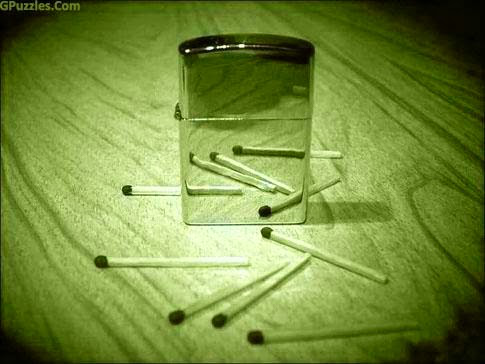
Can you find out how many ma...
[1824] Can you find out how many ma... - Can you find out how many matches are placed in the picture? - #brainteasers #riddles - Correct Answers: 408 - The first user who solved this task is Djordje Timotijevic
BRAIN TEASERS
enter your answer and press button OK

Can you find out how many ma...

Can you find out how many matches are placed in the picture?
Correct answers: 408
The first user who solved this task is Djordje Timotijevic.
#brainteasers #riddles
Register with your Google Account and start collecting points.
Check your ranking on list.

5 Best Office Jokes great for Mid-Week Laughter

1. Vengeance and the Boss
"My boss says I have a preoccupation with vengeance.
We’ll see about that."

2. Nodding Off in Meetings

"The reason we 'nod off to sleep' is so it looks like we’re just emphatically agreeing with everything when we’re in a boring meeting."

3. Emergency Contact Humor
"When an employment application asks who is to be notified in case of emergency, I always write,
'A very good doctor'."

4. Team Work Irony
"Team work is important;
it helps to put the blame on someone else."

5. Multitasking Expertise
"I’m great at multitasking.
I can waste time, be unproductive, and procrastinate all at once."


Jokes of the day - Daily updated jokes. New jokes every day.
Follow Brain Teasers on social networks

Brain Teasers

puzzles, riddles, mathematical problems, mastermind, cinemania...

Australopithecus skull

In 1924, Raymond Dart completed his work removing the first fossil skull of Australopithecus from its matrix of rock. Being one of "missing links" in man's evolution, Dart had taken exquisite care during 73 days to separate skull and stone, at work in his laboratory in Johannesburg, South Africa. Dart with his students made the find in the Taung limestone works in the Harts Valley of Bechuanaland. When an endocranial cast was found, at first it seemed to be just another primate skull. Then, Dart noticed how amazingly close to human it looked. Dart had discovered the Taung child, who was only three years old at the time of death. He named it Australopithecus africanus. (Australis means "south" and pithecus means "ape").
This site uses cookies to store information on your computer. Some are essential to help the site properly. Others give us insight into how the site is used and help us to optimize the user experience. See our privacy policy.