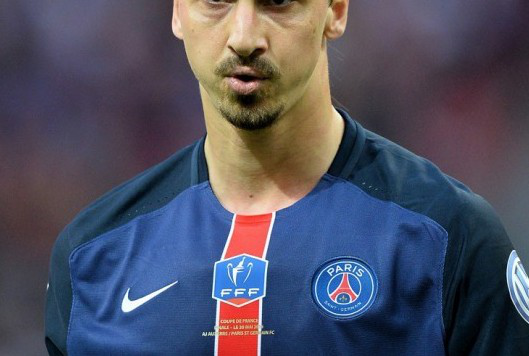
Can you name the athletes by the picture?
[3435] Can you name the athletes by the picture? - Can you name the athletes by the picture? - #brainteasers #riddles #sport - Correct Answers: 34 - The first user who solved this task is Djordje Timotijevic
BRAIN TEASERS
enter your answer and press button OK

Can you name the athletes by the picture?

Can you name the athletes by the picture?
Correct answers: 34
The first user who solved this task is Djordje Timotijevic.
#brainteasers #riddles #sport
Register with your Google Account and start collecting points.
Check your ranking on list.

šŸ„• Carrot Day Jokes – 10 Crunchy Laughs for April 4th!

April 4th is International Carrot Day, and we're celebrating the funniest root in the veggie patch! Whether you're a fan of puns or just here for the laughs, these carrot jokes will have you peeling with laughter.

Why do sailors eat so many carrots?
It helps them sea better!

Why was the programmer eating carrots?
So that they could C#!

How do carrots pay their bills?
With celery.

Check out some older carrot jokes šŸ„•

Why did the carrot go to therapy?
It had too many deep-rooted issues.

What did the carrot say during a job interview?
ā€œI’m very well-rounded and great with stew-dents.ā€

How do you make gold soup?
Put 24 carrots in it! Why was the carrot a terrible musician?
Because it always lost its beat in the stew.

What did the baby carrot say after a long day?
"I'm totally steamed."

What did the snowman say to the aggressive carrot?
Get out of my face!

How do carrots stay fit?
They do carrot-te.

Jokes of the day - Daily updated jokes. New jokes every day.
Follow Brain Teasers on social networks

Brain Teasers

puzzles, riddles, mathematical problems, mastermind, cinemania...

Norbert Wiener

Died 18 Mar 1964 at age 69 (born 26 Nov 1894). American mathematician who established the science of cybernetics, a term he coined, which is concerned with the common factors of control and communication in living organisms, automatic machines, and organizations. He attained international renown by formulating some of the most important contributions to mathematics in the 20th century. His work on generalised harmonic analysis and Tauberian theorems won the Bôcher Prize in 1933 when he received the prize from the American Mathematical Society for his memoir Tauberian theorems published in Annals of Mathematics in the previous year. His extraordinarily wide range of interests included stochastic processes, quantum theory and during WW II he worked on gunfire control.
This site uses cookies to store information on your computer. Some are essential to help the site properly. Others give us insight into how the site is used and help us to optimize the user experience. See our privacy policy.