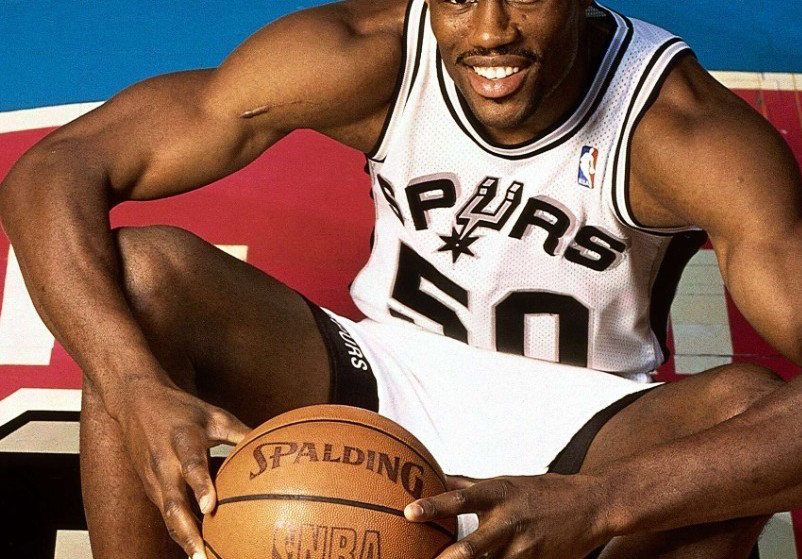
Can you name the athletes by the picture?
[3587] Can you name the athletes by the picture? - Can you name the athletes by the picture? - #brainteasers #riddles #sport - Correct Answers: 34 - The first user who solved this task is Allen Wager
BRAIN TEASERS
enter your answer and press button OK

Can you name the athletes by the picture?

Can you name the athletes by the picture?
Correct answers: 34
The first user who solved this task is Allen Wager.
#brainteasers #riddles #sport
Register with your Google Account and start collecting points.
Check your ranking on list.

Centipede pet

A single guy decides life would be more fun if he had a pet.

So he went to the pet store and told the owner that he wanted to buy an unusual pet. After some discussion, he finally bought a centipede, which came in a little white box to use for his house.

He took the box back home, found a good location for the box, and decided he would start off by taking his new pet to church with him. So he asked the centipede in the box, "Would you like to go to church with me today, we will have a good time."

But there was no answer from his new pet. This bothered him a bit, but he waited a few minutes and then asked him again, "How about going to church with me and receive blessings?"

But again, there was no answer from his new friend and pet. So he waited a few minutes more, thinking about the situation. He decided to ask him one more time; this time putting his face up against the centipede's house and shouting, "Hey, in there! Would you like to go to church with me and learn about The Lord???"

A little voice came out of the box:

"I heard you the first time! I'm putting on my shoes."

Jokes of the day - Daily updated jokes. New jokes every day.
Follow Brain Teasers on social networks

Brain Teasers

puzzles, riddles, mathematical problems, mastermind, cinemania...

Werner Heisenberg

Born 5 Dec 1901; died 1 Feb 1976 at age 74. Werner Karl Heisenberg was the German physicist and philosopher who discovered a way to formulate quantum mechanics in terms of matrices (1925). For that discovery, he was awarded the Nobel Prize for Physics for 1932. In 1927 he published his indeterminacy, or uncertainty, principle, upon which he built his philosophy and for which he is best known. He also made important contributions to the theories of the hydrodynamics of turbulence, the atomic nucleus, ferromagnetism, cosmic rays, and elementary particles, and he planned the first post-World War II German nuclear reactor, at Karlsruhe, then in West Germany.
This site uses cookies to store information on your computer. Some are essential to help the site properly. Others give us insight into how the site is used and help us to optimize the user experience. See our privacy policy.