Chess Knight Move
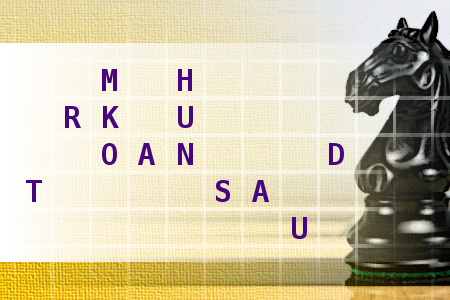
[3500] Chess Knight Move - Find the country and its capital city, using the move of a chess knight. First letter is S. Length of words in solution: 5,8. - #brainteasers #wordpuzzles #chessknightmove - Correct Answers: 46 - The first user who solved this task is On On Lunarbasil
BRAIN TEASERS
enter your answer and press button OK

Chess Knight Move

Find the country and its capital city, using the move of a chess knight. First letter is S. Length of words in solution: 5,8.
Correct answers: 46
The first user who solved this task is On On Lunarbasil.
#brainteasers #wordpuzzles #chessknightmove
Register with your Google Account and start collecting points.
Check your ranking on list.

Would you watch my car?

A tourist climbed out of his car in downtown Washington, D.C. He said to a man standing near the curb, "Listen, I'm going to be only a couple of minutes. Would you watch my car while I run into this store?"

"What?" the man huffed. "Do you realize that I am a member of the United States Senate?"

"Well no," the tourist said, "I didn't realize that. But it's all right. I'll trust you anyway."

Jokes of the day - Daily updated jokes. New jokes every day.
Follow Brain Teasers on social networks

Brain Teasers

puzzles, riddles, mathematical problems, mastermind, cinemania...

Sir Charles Thomas Newton

Born 16 Sep 1816; died 28 Nov 1894 at age 78. British archaeologist who excavated sites in southwestern Turkey and disinterred the remains of one of the seven wonders of the ancient world, the Mausoleum of Halicarnassus (at present-day Bodrum, Turkey). Newton joined staff of British Museum in 1840. He helped to establish systematic methods for archaeology. As the first keeper (curator) of Greek and Roman antiquities at the British Museum (1861-85), London, he greatly enriched its collection by making outstanding acquisitions. Along with the chief remains from Halicarnassus, he brought to the museum the bronze Delphian serpent from Istanbul, a sculpture of the Greek goddess Demeter, the colossal lion from Cnidus, and statues from the road to Didyma (Branchidae).
This site uses cookies to store information on your computer. Some are essential to help the site properly. Others give us insight into how the site is used and help us to optimize the user experience. See our privacy policy.