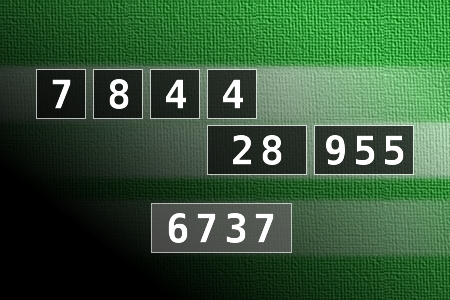
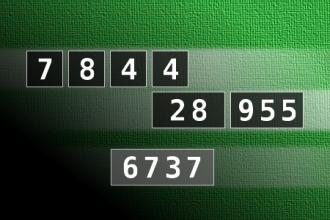
Calculate the number 6737
NUMBERMANIA: Calculate the number 6737 using numbers [7, 8, 4, 4, 28, 955] and basic arithmetic operations (+, -, *, /). Each of the numbers can be used only once.Correct answers: 39
The first user who solved this task is Djordje Timotijevic.
#brainteasers #math #numbermania

62 corny jokes to get you through Monday
- Do you have a Band-Aid? I have hurt myself while falling for you.
- You better direct that beauty elsewhere because you drive me up the wall.
- Girl, you're so stunning. I just forgot my pickup line.
- Your dad must be Liam Neeson because I'm Taken with you.
- If grapes make your skin beautiful, your home must be in a vineyard.
- How well did the phone propose to its girlfriend? He gave her a ring.
- You're like dandruff because I can't get you off my mind no matter how hard I try.
- Girl, do you know you're like asthma because you take my breath away?
- I am Microsoft. Can I crash at your place today?
- What do runners eat before a race? Nothing, they fast.
- I know what you did last summer. Do you want to do the same during the winter?
- Hey honey, do you want to hear a joke about construction? Never mind, I'm still working on it.
- What did that little boat tell the yacht? Hey, can I interest you in a row-mance?
- What did the guy with the broken leg say to the nurse? I have a clutch on you.
- What do you call two birds that are in love? Tweet hearts.
- What do you call a person with a rubber toe? Roberto.
- Why do melons have weddings? Because they cantaloupe.
- Why should you not fall in love with a pastry chef? He will desert you.
- What name is given to a factory that only markets passable products? A satisfactory.
- What does a ghost call his friend? My ghoul friend.
- Knock knock? Who is there? Paul. Paul, who? I'm Paul, in love with you.
- Are you casting for Wonder Woman? Because I have the perfect role.
- Are you feeling guilty about global warming? Because your hotness is melting the world.
- Will you kiss me, or should I lie to my diary?
- Hey girl, is that an earthquake, or have you just shaken my world?
- It seems I am addicted to yes and am allergic to no. So what's it going to be?
- Do you believe in love on first sight, or should I pass by you again?
- I may not be a professional, but we would look cute together in a photo.
- Girl, I need CPR after seeing your face.
- My job is secure. No one else needs it.
- It would be best to never break up with a goalie because he's the keeper.
- Do you have a date for Valentine's Day? Yes, it is on the 14th.
- What happened when two lovely vampires went on their first date? It was love at first bite.
- Why should you not marry a tennis player? Because love means nothing to them.
- What is the difference between marriage and love? Love is blind, while marriage is an eye-opener.
- My girlfriend works at the zoo. She is a keeper.
- I said I love you so much. I can't live without you. My girlfriend asked me, "Is it you talking or the beer?" I innocently answered her, "I was talking to the beer."
- Love is like algebra. Have you ever looked at your X and you wondered about Y?
- Do you know love is telling someone to go to hell and worrying about them reaching their safe?
- Please don't laugh at your girlfriend's choices because you're one of them.
- I love to tell my girlfriend, the house boss, by holding the mirror before her face.
- I said to my girlfriend she was drawing her eyebrows too high. She looked surprised.
- What did the cat say to her girlfriend? You're perfect for me.
- What do you call two cupids who are in love? A match made in heaven.
- What did one watermelon tell the other watermelon? You're the only one in melons.
- Why did the man accuse his wife of robbery? She stole his heart.
- Who has a date on Valentine's Day? The calendar.
- When you fall in love with a chef, you get buttered up.
- The hopeless romantic baker told his dough, I knead you.
- The tightrope walker found love through online dating.
- Is it hot in here, or are you busy raising the temperature?
- Girl, give me back my heart because it seems you stole it when I first set my eyes on you.
- Why did the skeleton go to the party alone? He had nobody to go with.
- What did the shark tell the other while eating clownfish? Wow, this tastes funny.
- Girl, what do you call a magician dog? Labracadabrador.
- What do you call a pony with a cough? A little hoarse.
- I saw two zombies on a date, and they said romance is dead.
- The lion broke up with his girlfriend since she was a cheetah.
- Your name must be WiFi because I am feeling a strong connection.
- Babe, you turn my floppy disk into a hard drive.
- What do you say to your single friends on Valentine's Day? Happy independence day.
- I told my boyfriend to text me when he reached home. He must be homeless.