Chess Knight Move
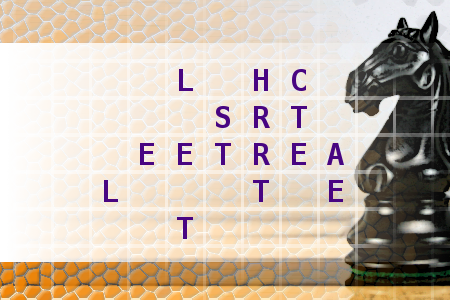
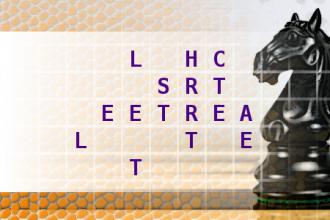
[5139] Chess Knight Move - Find the title of novel, using the move of a chess knight. First letter is T. Length of words in solution: 3,7,6. - #brainteasers #wordpuzzles #chessknightmove - Correct Answers: 24 - The first user who solved this task is Djordje Timotijevic
BRAIN TEASERS
enter your answer and press button OK

Chess Knight Move

Find the title of novel, using the move of a chess knight. First letter is T. Length of words in solution: 3,7,6.
Correct answers: 24
The first user who solved this task is Djordje Timotijevic.
#brainteasers #wordpuzzles #chessknightmove
Register with your Google Account and start collecting points.
Check your ranking on list.

After dating a young lady for ...

After dating a young lady for some time a young man decides it is time to marry her.
He proceeds with all the necessary plans and finally the day comes.
On the day of the wedding the young man has yet to pay the pastor for performing the ceremony. However the pastor has a plan.
The service proceeds as planned the vows are exchanged etc. Now it is time for the groom to kiss his bride. The pastor sees this as the perfect opportunity to ask to be paid. He pulls the young man aside and asks him. Can you please pay me?
Not wanting to create a seen the young man asked. How much do I owe you?
The pastor thinks quickly and replies, pay me according to your wife's beauty.
The young man discretely pulled out five dollars and gave it to the pastor.
Although annoyed by this, the pastor continues the ceremony and says; you may now kiss the bride. At this point the veil is lifted from the brides face to allow the groom to kiss her. As the groom is about to kiss his new bride the pastor interrupts and promptly hand the groom four dollars and fifty cents.
Jokes of the day - Daily updated jokes. New jokes every day.
Follow Brain Teasers on social networks

Brain Teasers

puzzles, riddles, mathematical problems, mastermind, cinemania...

Hans Spemann

Died 12 Sep 1941 at age 72 (born 27 Jun 1869).German embryologist who was awarded the Nobel Prize for Physiology and Medicine (1935) for his discovery of embryonic induction, an effect involving several parts of the embryo in directing the development of the early group of cells into specific tissues and organs. Working extensively on the early development of the newt, he showed that the in the earliest stage, tissues may be transplanted to different areas of the embryo, and it then develops based on the new location and not from where it came. For example, early tissue cut from an area of nervous tissue might be moved to an area of skin tissue where it then grows into the same form as the surrounding skin.
This site uses cookies to store information on your computer. Some are essential to help the site properly. Others give us insight into how the site is used and help us to optimize the user experience. See our privacy policy.