
Decrypt hidden message
[2816] Decrypt hidden message - Can you decrypt hidden message (122 SG1S VD RDD NQ RDDL HR ATS 1 CQD1L VHSGHM 1 CQD1L)? - #brainteasers #wordpuzzles #riddles - Correct Answers: 27 - The first user who solved this task is Sanja Šabović
BRAIN TEASERS
enter your answer and press button OK

Decrypt hidden message

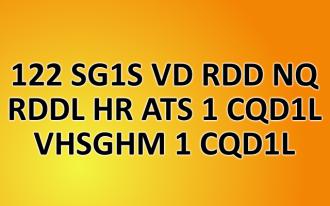
Can you decrypt hidden message (122 SG1S VD RDD NQ RDDL HR ATS 1 CQD1L VHSGHM 1 CQD1L)?
Correct answers: 27
The first user who solved this task is Sanja Šabović.
#brainteasers #wordpuzzles #riddles
Register with your Google Account and start collecting points.
Check your ranking on list.

Little Nancy was in the garden...

Little Nancy was in the garden filling in a hole when her neighbor peered over the fence. Interested in what the cheeky-faced youngster was up to, he politely asked, "What are you doing there, Nancy?"
"My goldfish died," replied Nancy tearfully without looking up, "and I've just buried him."
The neighbor was very concerned. "That's an awfully big hole for a goldfish, isn't it?"
Nancy patted down the last heap of dirt then replied, "That's because he's inside your fricking cat."
Jokes of the day - Daily updated jokes. New jokes every day.
Follow Brain Teasers on social networks

Brain Teasers

puzzles, riddles, mathematical problems, mastermind, cinemania...

Carl Graebe

Born 24 Feb 1841; died 19 Jan 1927 at age 85.German organic chemist who, assisted by Carl Liebermann, synthesized (1868) the orange-red dye alizarin, which in the textile industry quickly supplanted the natural source of the dye from the madder plant root. Alizarin (dihydroscyanthraquinone) was recognized by Graebe and Liebermann, as a derivative of anthracene, a hydrocarbon contained in coal-tar. Also in 1868, they elaborated a method for preparing it commercially from anthracene. Upon this, one of the early German dyestuff products, arose rapidly a great chemical industry. Graebe also introduced the chemical terms "ortho," "meta," and "para," well known to organic chemistry students, which indicate the position of groups attached to a benzene ring.
This site uses cookies to store information on your computer. Some are essential to help the site properly. Others give us insight into how the site is used and help us to optimize the user experience. See our privacy policy.