
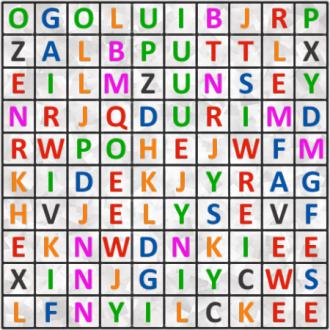
Find a famous person
Find the first and the last name of a famous person. Text may go in all 8 directions. Length of words in solution: 4,7.Correct answers: 17
The first user who solved this task is Djordje Timotijevic.
#brainteasers #wordpuzzles

Getting John to Quit
John was a loyal choir member, but he could not carry a tune. To make things worse, he sang loud and made others sing off key. Without success, the choir director had tried to discourage John from participating in the choir. The choir director asked the pastor's help in getting John out of the choir. The pastor agreed to try. The pastor tried to find tasks and responsibilities that would interfere with John's attendance at choir rehearsal or keep him out of the choir loft on Sunday morning. John, however, would not accept any of the tasks or responsibilities, stating that he would not shirk his duties as a loyal choir member. Finally, the choir director gave the pastor an ultimatum, "Either you find a way to get John out of the choir or I will resign as choir director."So, with much uneasiness, the pastor called upon John at home one evening and said, "John, I must ask you to drop out of the choir." John was shocked and asked, "Why would you ask such a thing? We need all the singers we can get." The pastor replied, "Well, John, people are complaining about your singing." "How many?" was John's response. Not wanting to be too harsh and admit that nearly everyone in the congregation had been complaining, the pastor said, "I've received more than a dozen complaints." "I'm sorry, pastor, that's not enough. I've heard a lot more complaints about your preaching and you haven't quit yet."-