Find a famous person
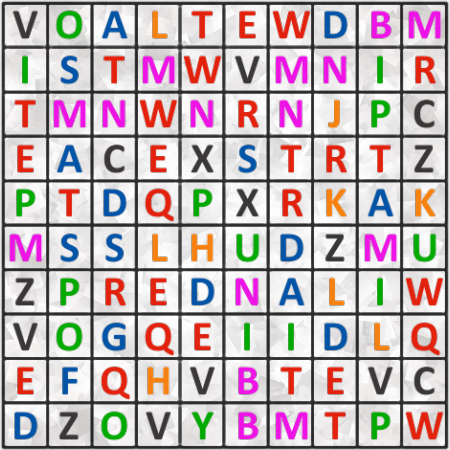
[5062] Find a famous person - Find the first and the last name of a famous person. Text may go in all 8 directions. Length of words in solution: 4,8. - #brainteasers #wordpuzzles - Correct Answers: 24 - The first user who solved this task is Djordje Timotijevic
BRAIN TEASERS
enter your answer and press button OK

Find a famous person

Find the first and the last name of a famous person. Text may go in all 8 directions. Length of words in solution: 4,8.
Correct answers: 24
The first user who solved this task is Djordje Timotijevic.
#brainteasers #wordpuzzles
Register with your Google Account and start collecting points.
Check your ranking on list.

12 Dad Jokes for National Tell A Joke Day

Monsters are not good at math.... Unless you Count Dracula.

19 had fight with 20 ... and 21

I would tell a joke about pzza, but its too cheesy

I gave away all my batteries today ... free of charge

I got a universal remote for Christmas ... well this changes everything

I had a joke about construction, but im still working on it

Did u get a haircut? No i cut them all out

Dracula doesnt have many friends because hese a pain in the neck.

I stayed up all night wondering where the Sun had gone. Then it dawned on me.

What did the sushi say to the bumble bee? Wasabi

Mountain aren't just funny, their hill areas.

I asked dad for his best dad joke, he said you.

Jokes of the day - Daily updated jokes. New jokes every day.
Follow Brain Teasers on social networks

Brain Teasers

puzzles, riddles, mathematical problems, mastermind, cinemania...

Edison patent

In 1922, Thomas A. Edison was issued a U.S. patent for a "Storage-Battery Electrode and the Production of Same" (No. 1402751). The electrodes were intended for batteries of the Edison type using nickel hydroxide for the active material for the positive elements and electrolytically active iron as the active material for the negative elements in an alkaline solution. The improved electrode element was designed to provide a high discharge rate by decreasing the internal resistance of the cell. The electrode element consisted of a thin metallic plate with small and closely adjacent perforations. The metal surface had a thin coating or film of a hydroxideof a suitable metal (preferable nickel) applied by electrolytic deposition.«[Image: one of the patent diagrams showing a fragmental sectional view of the electrode element.]
This site uses cookies to store information on your computer. Some are essential to help the site properly. Others give us insight into how the site is used and help us to optimize the user experience. See our privacy policy.