Find number abc
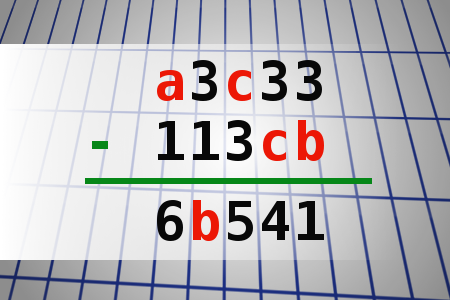
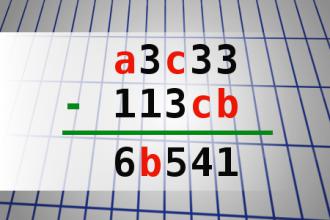
[3540] Find number abc - If a3c33 - 113cb = 6b541 find number abc. Multiple solutions may exist. - #brainteasers #math - Correct Answers: 59 - The first user who solved this task is Linda Tate Young
BRAIN TEASERS
enter your answer and press button OK

Find number abc

If a3c33 - 113cb = 6b541 find number abc. Multiple solutions may exist.
Correct answers: 59
The first user who solved this task is Linda Tate Young.
#brainteasers #math
Register with your Google Account and start collecting points.
Check your ranking on list.

Reaching the end of a job inte...

Reaching the end of a job interview, the human resources person asked a young engineer fresh out of MIT, "And what starting salary were you looking for?" The engineer said, "In the neighborhood of $125,000 a year, depending on the benefits package." The interviewer said, "Well, what would you say to a package of 5-weeks vacation, 14 paid holidays, full medical and dental, company matching retirement fund to 50% of salary, and a company car leased every 2 years - say, a red Corvette?"
The engineer sat up straight and said, "Wow! Are you kidding?" And the interviewer replied, "Yeah, but you started it."
Jokes of the day - Daily updated jokes. New jokes every day.
Follow Brain Teasers on social networks

Brain Teasers

puzzles, riddles, mathematical problems, mastermind, cinemania...

Martinus Willem Beijerinck

Born 16 Mar 1851; died 1 Jan 1931 at age 79. Dutch botanist whowas one of the first microbiologists to recognize the importance of lactic acid bacteria for food production. Hecontributed to agriculture, botany, microbiology, chemistry and genetics. In research on gall wasps and the formation of galls (1882) he laid groundwork for the theory of ontogeny in higher plants and animals whereby growth enzymes act in series in a fixed order (1917). Since his father was a tobacco dealer who went bankrupt, he researched the tobacco mosaic virus, which causes a disease of tobacco plants with serious economic impact. He discovered that even after filtering the sap of an infected plant to remove bacteria, the liquid was still able to carry infection to another plant. Thus he knew the disease was not due to bacteria, but by something else in the the liquid, which he called a filterable virus (from Latin word for poison) but which later researchers demonstrated in fact had a particle form.«
This site uses cookies to store information on your computer. Some are essential to help the site properly. Others give us insight into how the site is used and help us to optimize the user experience. See our privacy policy.