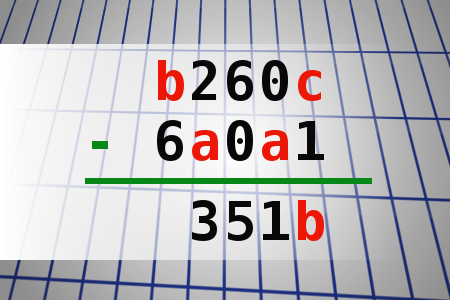
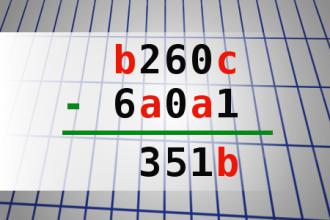
Find number abc
If b260c - 6a0a1 = 351b find number abc. Multiple solutions may exist.Correct answers: 16
The first user who solved this task is Nasrin 24 T.
#brainteasers #math

Jim was a just out of boot cam...
Jim was a just out of boot camp, and was on his first ship. About two hours out of port, he began to get a bit ill from the motion of the ship. He approached an ensign, also just out of training and on his first cruise.
He saluted and said, "Excuse me sir, I am feeling seasick, and I wondered if I may have permission to go downstairs to the dispensary."
The ensign returned his salute and replied, "Sailor, you are in the Navy now. You don't go downstairs, you go below! There is no dispensary on this ship, there is sickbay. Not only that, that is not the floor, it is a deck; that is not the ceiling, it is the overhead; that is not a pillar, it is a stanchion; that is not a water fountain, it is a scuttlebutt. If I ever hear you using civilian words instead of Naval jargon, I will throw you out of that little round window over there."
He saluted and said, "Excuse me sir, I am feeling seasick, and I wondered if I may have permission to go downstairs to the dispensary."
The ensign returned his salute and replied, "Sailor, you are in the Navy now. You don't go downstairs, you go below! There is no dispensary on this ship, there is sickbay. Not only that, that is not the floor, it is a deck; that is not the ceiling, it is the overhead; that is not a pillar, it is a stanchion; that is not a water fountain, it is a scuttlebutt. If I ever hear you using civilian words instead of Naval jargon, I will throw you out of that little round window over there."